
Blog
Quick answer: This Duralast polyaspartic system review explains what the coating is, how we install it, and why it outperforms standard epoxy. The Duralast® system is a professional-grade polyaspartic floor coating that is 5X stronger than traditional epoxy, cures quickly, and stays UV-stable so it won’t yellow. Paired with diamond-grinding prep, it shrugs off the freeze-thaw cycles and road salt that wreck ordinary garage floors in Fort Wayne and Northeast Indiana. For most homeowners and businesses, it is a one-time floor that lasts decades.
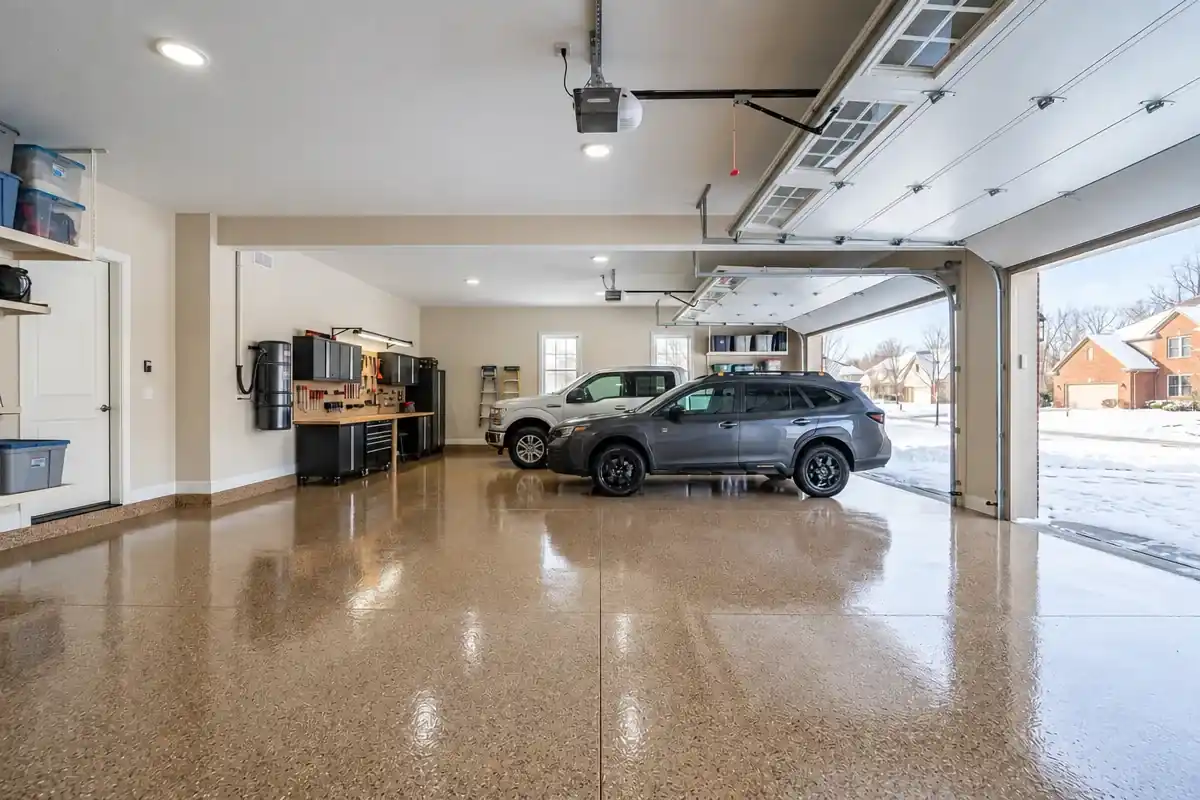
If you are researching floor coatings in Fort Wayne, you have probably seen bold claims about polyaspartic. This Duralast polyaspartic system review cuts through the marketing and walks through exactly what the system is, how our six-step process works, and where it genuinely beats epoxy. The short version: installed correctly over properly prepared concrete, the Duralast® system is one of the most durable, great-looking floors you can put on concrete.
We install the Duralast® system every week across Allen County, so this is a contractor’s-eye view, not a brochure. Below we cover the real pros and cons, honest cost ranges, and why this system is built for Indiana’s climate. For a deeper look at the material itself, our polyaspartic services page goes further.
Key Takeaways
- The Duralast® system is a layered polyaspartic build, polyurea basecoat, vinyl chips, and a clear polyaspartic topcoat, not a single bucket of product.
- It is 5X stronger than traditional epoxy, UV-stable, and cures quickly in most cases.
- Diamond-grinding prep is the difference between a floor that lasts decades and one that peels.
- It resists hot-tire pickup, road salt, and freeze-thaw movement, the things that fail epoxy in Indiana.
- Expect roughly $4-$12 per square foot installed; a 480 sq ft two-car garage at $5-$8 per sq ft lands around $2,400-$3,840.
- Backed by a lifetime warranty and 4,500+ local installs since 2014.
What Is the Duralast® Polyaspartic System?
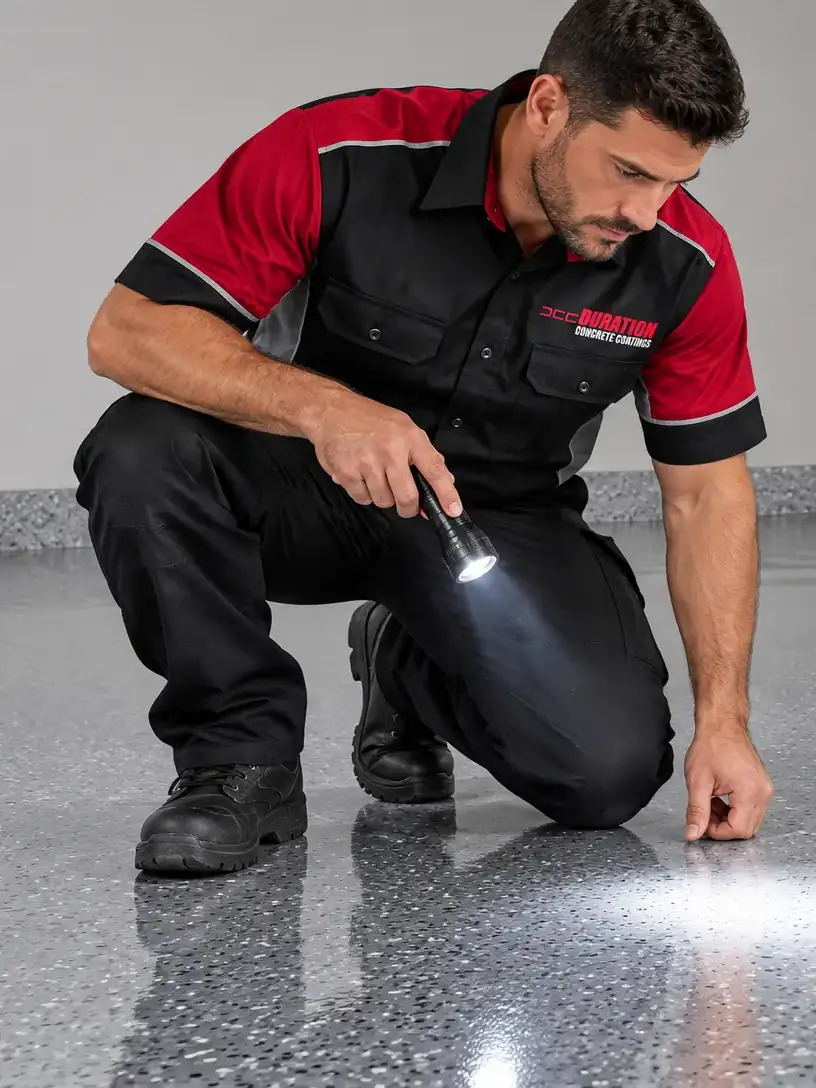
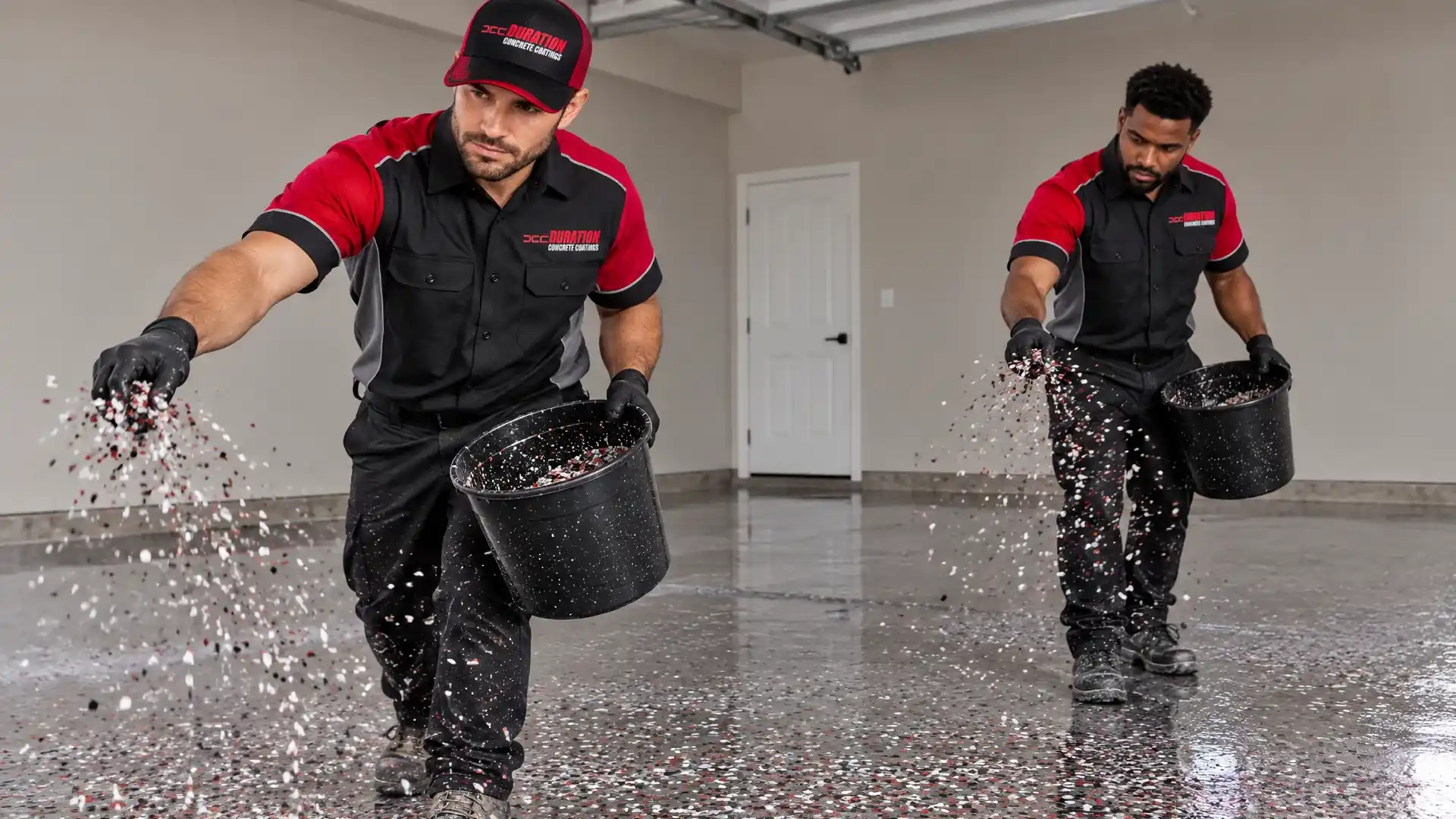
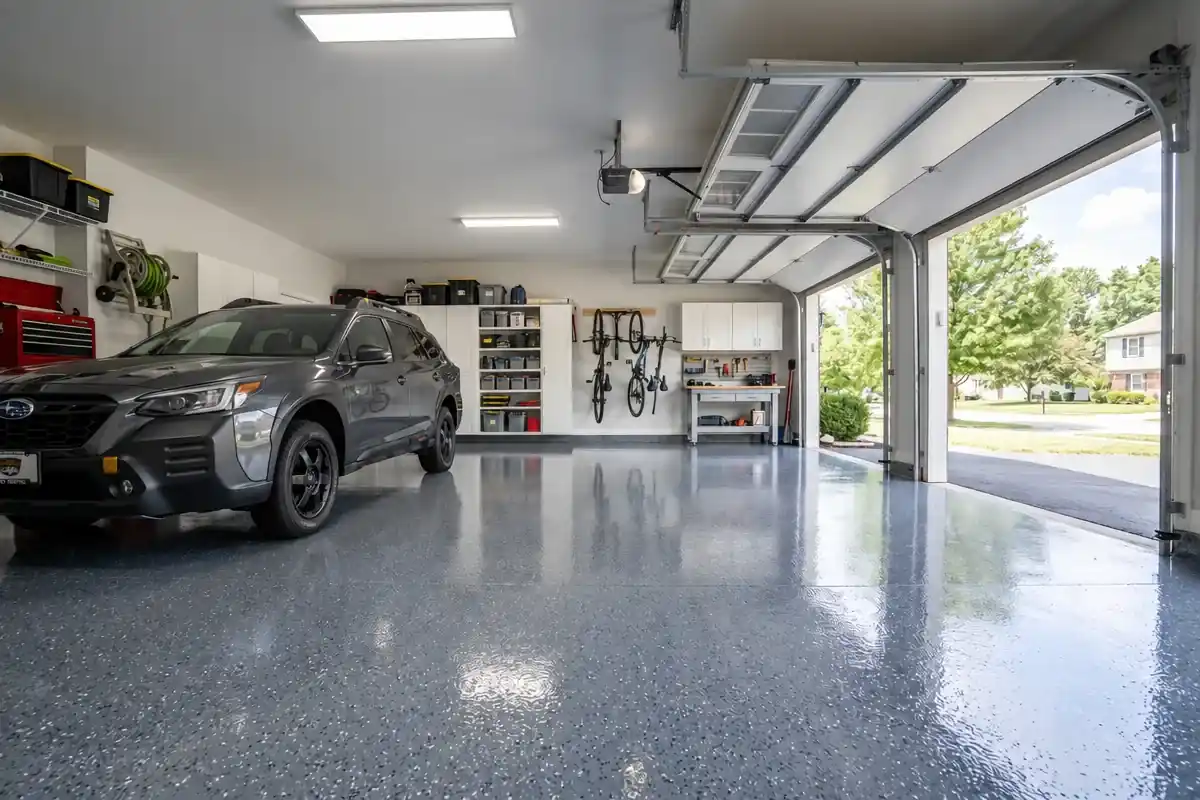
Polyaspartic coatings are a fast-curing, UV-stable class of polyurea-based coatings used to protect concrete. The Duralast® system is a specific professional-grade polyaspartic build that Duration Concrete Coatings installs. It is not a single product you roll on, it is a layered system: a tough polyurea basecoat, hand-broadcast decorative vinyl chips, and a clear polyaspartic topcoat, all bonded to diamond-ground concrete.
The chemistry is what sets it apart. The fast cure lets the floor return to service in hours instead of the days epoxy needs, and the stabilized formula resists the UV rays that turn ordinary epoxy yellow. That mix of speed, strength, and color stability is why polyaspartic has largely replaced epoxy as the premium choice for garage and commercial floors.
How Does the Duralast® System Work? Our 6-Step Process
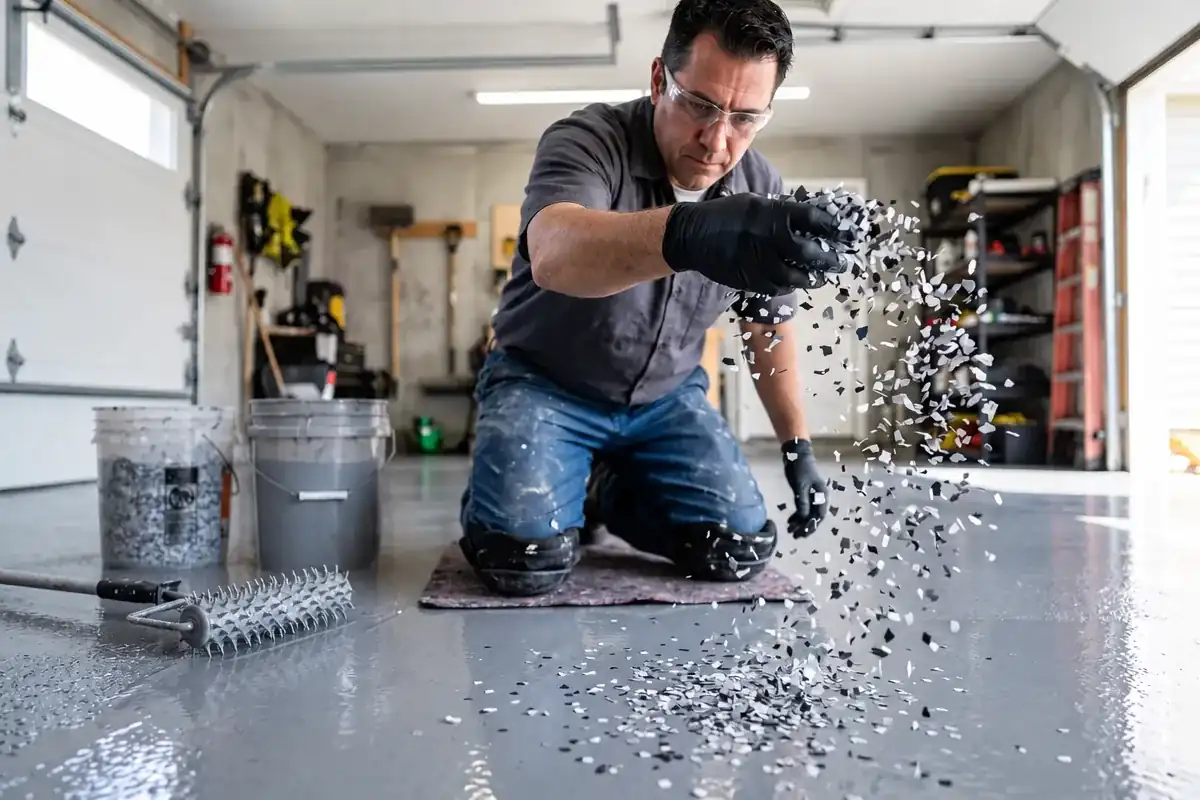
Every Duralast® floor follows the same rigorous six-step process. The order matters, each layer depends on the one beneath it being done right.
- Diamond grinding: We grind the concrete with diamond tooling to open the surface profile so the coating bonds mechanically, not just sits on top.
- Concrete repair: We fill cracks and spalling with concrete mender so flaws don’t telegraph through the finished floor.
- Polyurea basecoat: We apply the polyurea basecoat, the structural layer that is 5X stronger than epoxy and flexes with the slab.
- Broadcast vinyl chips: We hand-broadcast decorative vinyl chips into the wet basecoat for color, depth, and texture.
- Scrape excess chips: We scrape back loose chips, leaving an even, grippy surface with built-in slip resistance.
- Clear polyaspartic topcoat: We seal it all with a UV-stable clear polyaspartic topcoat that locks in the chips and stops yellowing.
Most residential floors are finished in a single day, and you can usually walk on them that evening and park on them the next day.
Pro insight: The single biggest reason coatings fail is skipped or rushed prep. A floor that is acid-etched or just pressure-washed instead of diamond-ground may look identical on day one and then peel within a year. When you compare quotes, ask exactly how the concrete will be prepared, that one answer predicts the result more than the brand on the bucket.
What Makes Duralast® Different From Standard Epoxy?
Epoxy was the standard for decades, but it has real weaknesses: it is rigid, slow to cure, and prone to yellowing under UV light. Polyaspartic was engineered to fix exactly those problems. Here is how the Duralast® system compares head-to-head.
| Feature | Standard Epoxy | Duralast® Polyaspartic |
|---|---|---|
| Strength | Baseline | About 5X stronger |
| Cure time | 24-72 hours | Quick cure |
| UV stability | Yellows and fades | UV-stable, won’t yellow |
| Flexibility | Rigid, prone to hot-tire pickup | Flexible, resists peeling |
| Typical lifespan | 5-10 years | 15-20+ years |
| Install time | 2-3 days | Often 1 day |
Epoxy still has a place, it is inexpensive and fine for a low-traffic interior basement that never sees sun or tires. But for a garage, showroom, or any floor that faces real use, the durability gap is hard to ignore.
Is the Duralast® Polyaspartic System Worth It? Honest Pros and Cons
No coating is perfect for every situation, so here is the straight version after hundreds of installs.
What We Love About It
- Quick return to service, minimal downtime for homeowners and businesses.
- Won’t yellow, peel, or suffer hot-tire pickup when installed correctly.
- Easy to clean: a non-porous surface that wipes up oil, salt, and chemicals.
- Decorative chips hide imperfections and add slip resistance.
Where It Has Trade-Offs
- Higher upfront cost than epoxy or a DIY kit, you pay more once.
- It is not a true DIY project; the fast cure leaves little margin for error, so it needs a trained crew.
- A bare clear coat can be slick when wet, which is why we add chips or a non-slip additive.
Weighed together, the trade-offs are mostly about budget and the need for professional installation, not performance. For a floor you only want to do once, the value lands firmly on the pro side.
How Much Does the Duralast® System Cost in Fort Wayne?
Polyaspartic costs more than epoxy upfront, but it is priced as a long-term investment rather than a quick fix. As a starting point for budgeting:
- Per square foot: roughly $4-$12 installed, depending on system and concrete condition.
- Two-car garage: a 480 sq ft garage at the Duralast® $5-$8 per sq ft runs about $2,400-$3,840.
- Biggest cost drivers: square footage, crack and spall repair, and decorative options.
Because concrete condition varies so much, the only accurate number comes from seeing the floor. We provide free on-site estimates and can usually quote on the spot, you can also browse finish options on our chip color selector first.
Why We Use Duralast® for Fort Wayne and Northeast Indiana Floors
Indiana is hard on concrete. Winters bring freeze-thaw cycles that expand and contract the slab, road salt tracks in off the street, and summer humidity stresses any coating that can’t breathe with the floor. A rigid epoxy fights that movement and eventually loses. The Duralast® system flexes with the slab and seals out salt and moisture, which is why it holds up across Fort Wayne and the surrounding communities.
We have installed 4,500+ floors across Allen County since 2014, in Fort Wayne, New Haven, Auburn, Huntertown, and Woodburn, and every one is backed by a lifetime warranty against peeling, bubbling, and adhesion failure. That local track record, paired with diamond-grinding prep, is the real reason we stand behind this system in Indiana’s climate.
The Duralast® Polyaspartic System at a Glance
- A layered, professional polyaspartic system: polyurea base, vinyl chips, UV-stable clear topcoat.
- 5X stronger than epoxy, quick cure, UV-stable, and flexible enough to beat hot-tire pickup.
- Diamond grinding prep is what makes it last 15-20+ years, not just the product.
- Roughly $4-$12 per sq ft; a 480 sq ft two-car garage at $5-$8 per sq ft runs about $2,400-$3,840.
- Built for Indiana’s freeze-thaw, road salt, and humidity, and backed by a lifetime warranty.
- Next step: get a free on-site estimate. Call 260-527-7744 or request a free estimate.
Related Guides
- Polyaspartic vs. Epoxy Garage Floor Coating: A Side-by-Side Comparison
- What Is Polyaspartic Floor Coating? A Fort Wayne Contractor’s Explanation
- Polyaspartic Garage Floor Coating in Fort Wayne, IN
- Epoxy Garage Floors in Fort Wayne: What to Know Before You Choose
- How to Choose a Garage Floor Coating Company in Fort Wayne
- Garage Floor Coating in Fort Wayne, IN: Complete Guide
- Our Polyaspartic Services
Get a Free Duralast® Quote in Fort Wayne
If you want a floor you only have to do once, the Duralast® polyaspartic system is built for it, strong, fast, good-looking, and engineered for Indiana’s climate. The next move is a free on-site estimate so we can check your concrete and give you an exact number. Browse finished projects in our portfolio to see the results.
Ready to Get Started?
Contact Duration Concrete Coatings today for a free, no-obligation quote and find out why Fort Wayne trusts the Duralast® system.
About Duration Concrete Coatings: Duration Concrete Coatings by Duralast is a locally owned concrete floor-coating company based in Fort Wayne, IN, serving Allen County and Northeast Indiana since 2014. We have completed 4,500+ residential and commercial installations using the proprietary Duralast® polyaspartic system, hold a 5.0-star Google rating, and back our work with a lifetime warranty. Call 260-527-7744 for a free estimate.
Concrete Coating Services by Location
- Fort Wayne IN Concrete Coating Contractors
- Woodburn IN Concrete Coating Contractors
- New Haven IN Concrete Coating Contractors
- Huntertown IN Concrete Coating Contractors
Does the Duralast Coating Get Slippery or Hold Up to Hot Tires?
The broadcast vinyl chips add texture that improves traction when the floor is wet, and a non-slip additive can be included for extra grip. Because polyaspartic stays flexible, it resists hot-tire pickup, the common failure where epoxy softens and peels off under warm tires.
Can the Duralast System Be Installed in Cold Indiana Weather?
Yes. Polyaspartic cures across a wider temperature range than epoxy, so we can install year-round in Northeast Indiana, including indoor garages during winter, as long as manufacturer temperature and moisture guidelines are followed.