
Specialty Service
Where Polyurea Fits, and How It Compares
Polyurea is a fast-curing, highly flexible resin coating that stays stable at high temperatures, around 266 degrees F, and resists aggressive chemicals, which makes it the right pick for industrial, high-heat and wash-down floors where epoxy would soften or crack. It cures in hours and bridges the slab movement that cracks a rigid coating.
Polyurea sits at the demanding end of the coating range, and the honest answer is that it is not always the right one. It stays stable at high temperatures, around 266 degrees F, where epoxy softens, so it suits hot industrial floors, kitchens and wash bays. It is extremely flexible, so it bridges slab movement and thermal cycling that would crack a rigid epoxy. And it cures in a few hours, faster than polyaspartic and much faster than epoxy. The trade-offs: it is a more specialized, higher-cost install, and its very fast set demands an experienced crew. For a typical garage or showroom, a polyaspartic or epoxy system is the better value, and we will tell you so.
The System We Install and How Long It Takes
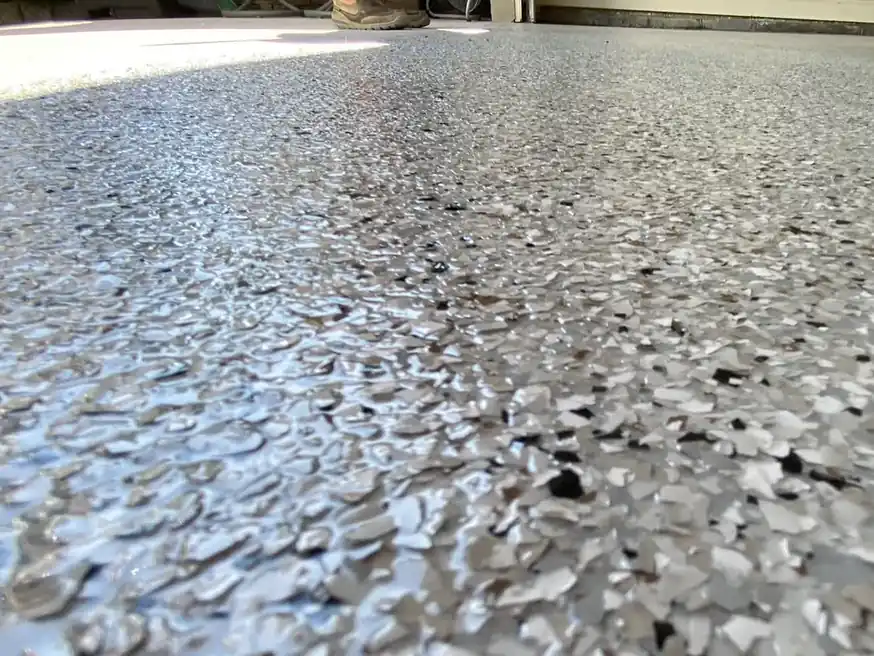
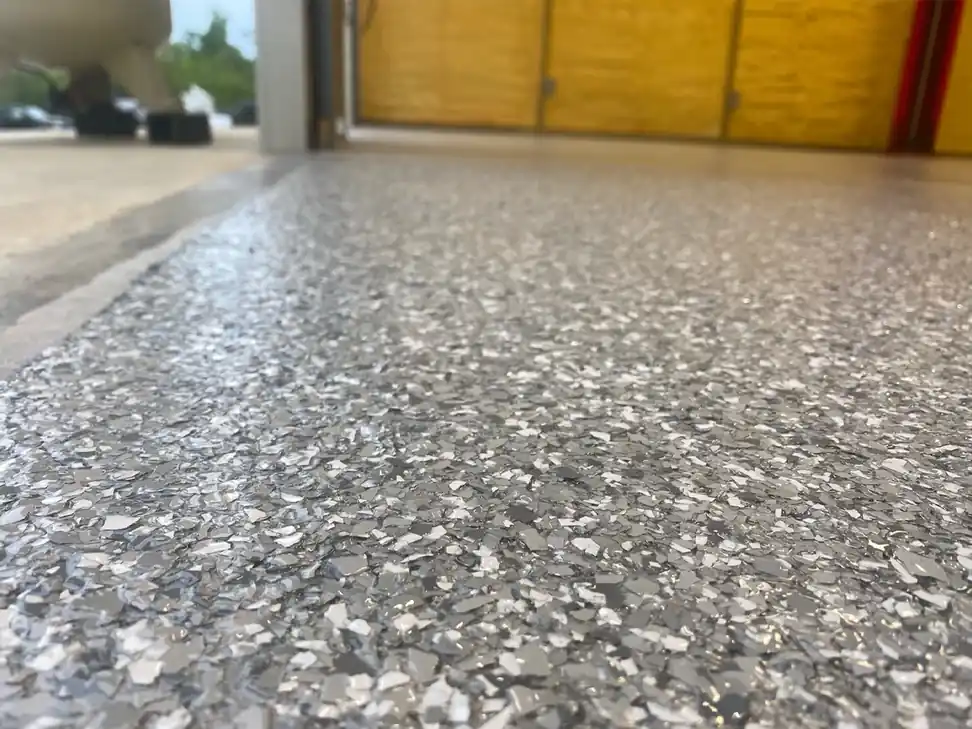
We use polyurea most often as a high-performance topcoat or a base membrane in a multi-layer system, an epoxy base for film build with a polyurea or polyaspartic topcoat for cure speed, flexibility and chemical and heat resistance. It is part of our own Duralast system. Because polyurea cures in hours, we can return even a demanding industrial floor to service quickly.
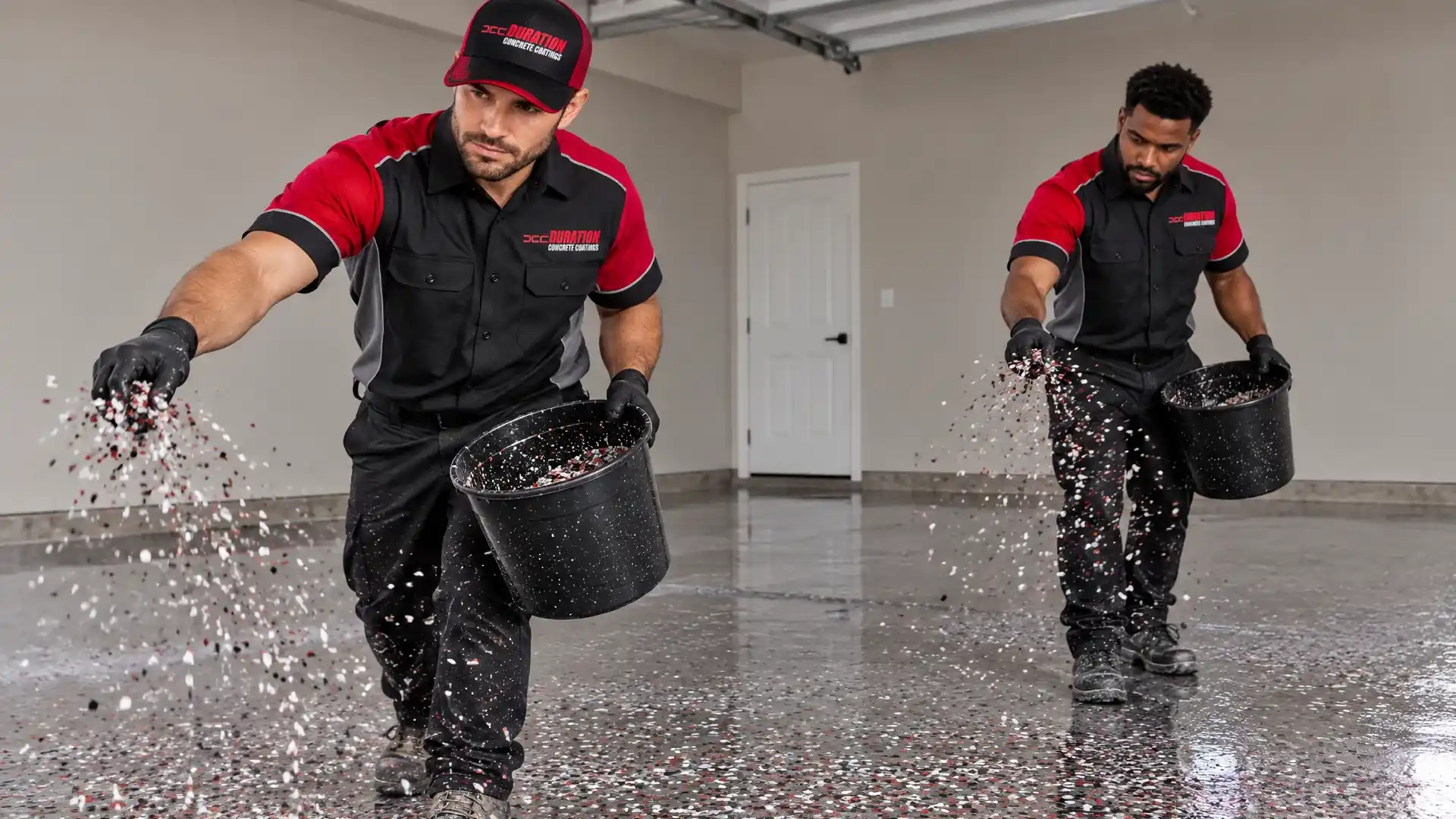
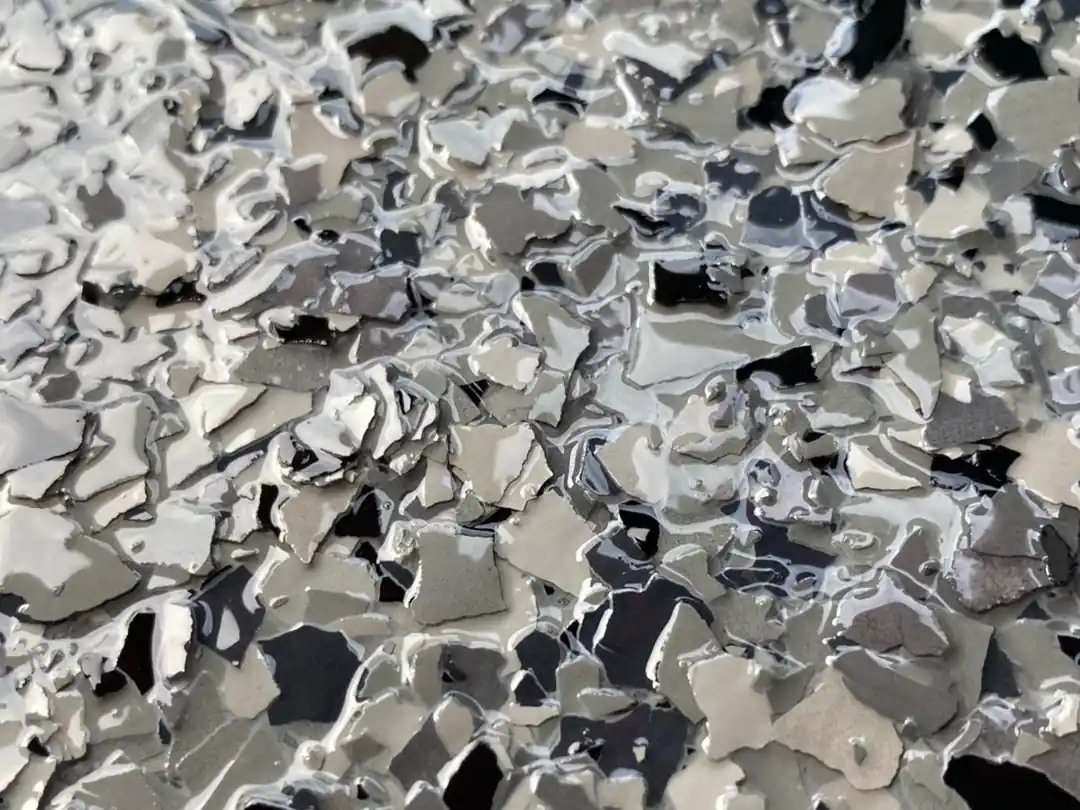
Every floor gets the same six-step process: we grind the slab to a CSP 1 to 3 profile, patch cracks and spalls, moisture-test and prime the concrete, apply the base coat, broadcast the chips and seal it with a clear topcoat.
Polyurea vs Polyaspartic vs Epoxy
Think of it as a range. Epoxy is the rigid, cost-effective, high-build base, suited to heated indoor floors, curing in 24 to 72 hours. Polyaspartic is a fast, UV-stable, flexible topcoat that cures in about 24 hours and handles cold. Polyurea is the most flexible and most heat-stable of the three, curing in hours and rated to about 266 degrees F, for the hardest industrial and high-heat jobs. Most floors get an epoxy base with a polyaspartic or polyurea topcoat, so you get build from one and speed, flexibility and resistance from the other.
Built for Indiana Winters
Polyurea's flexibility and cold-tolerance make it a strong fit for unheated Indiana spaces and the freeze-thaw at dock doors and entries, where it bridges movement and resists the road-salt chloride that scales a rigid coating. We spec it where a floor actually needs that performance rather than as a default.
What It Costs
We price every floor in person with a free on-site estimate. The cost depends on the square footage, the slab's condition and moisture, the coating system and build, and any off-hours scheduling. You get a straight, written price before any work starts.
Where We Work
We install polyurea coating across Fort Wayne, Northeast Indiana and adjacent Northwest Ohio, including Fort Wayne, New Haven, Huntertown, Auburn and the surrounding communities. (See all service areas)
Our General Manager Is on Every Job
Founded in 2014, Duration keeps general manager Dan Diven on-site for every job, with a crew of 10 and 4,500 projects across Fort Wayne and Northeast Indiana, holding a 5.0 rating from 102 Google reviews. This service is part of our commercial floor coating work.