
Our Service
What Pool Deck Coating Is, and Why Indiana Decks Need a Different One
A pool deck coating is a bonded, textured finish that resurfaces tired or cracked concrete into a slip-resistant, easy-clean surface. Here is the part the national brands miss: they write for Texas and Florida heat, where a cool-deck finish is the goal. In Fort Wayne, the thing that destroys a concrete deck is the freeze-thaw cycle, water soaking into the surface, freezing, and flaking the top off, made worse by the chlorine and salt around a pool. We coat and resurface decks to resist that, with a textured surface that stays cooler than bare concrete and grips wet feet. We give a free on-site estimate.
Freeze-Thaw and Salt: The Real Threats Here
- Spalling and scaling. Surface water freezes and pops the top layer off a bare or sealed deck. Concrete's resistance to this is graded by the ASTM C666 freeze-thaw test, and a flexible coating that seals the surface stops the water getting in to begin with.
- Chlorine and pool chemicals. Splash-out and a pool's shifting pH, typically kept between about 7.2 and 7.8, are hard on concrete and on cheap coatings. Ours resists it.
- Cracking from slab movement. We chase and repair cracks first, and detail the expansion joints, so they do not telegraph back through the finish.
Resurface or Replace? Usually Resurface
If your deck is structurally sound but looks rough, cracked, faded or spalled, resurfacing costs far less than tearing it out and repouring, and it is done in a fraction of the time. We replace only when the slab itself has failed, heaved more than an inch, or lost structural integrity. On a free estimate we tell you honestly which your deck needs.
Slip Resistance and Comfort
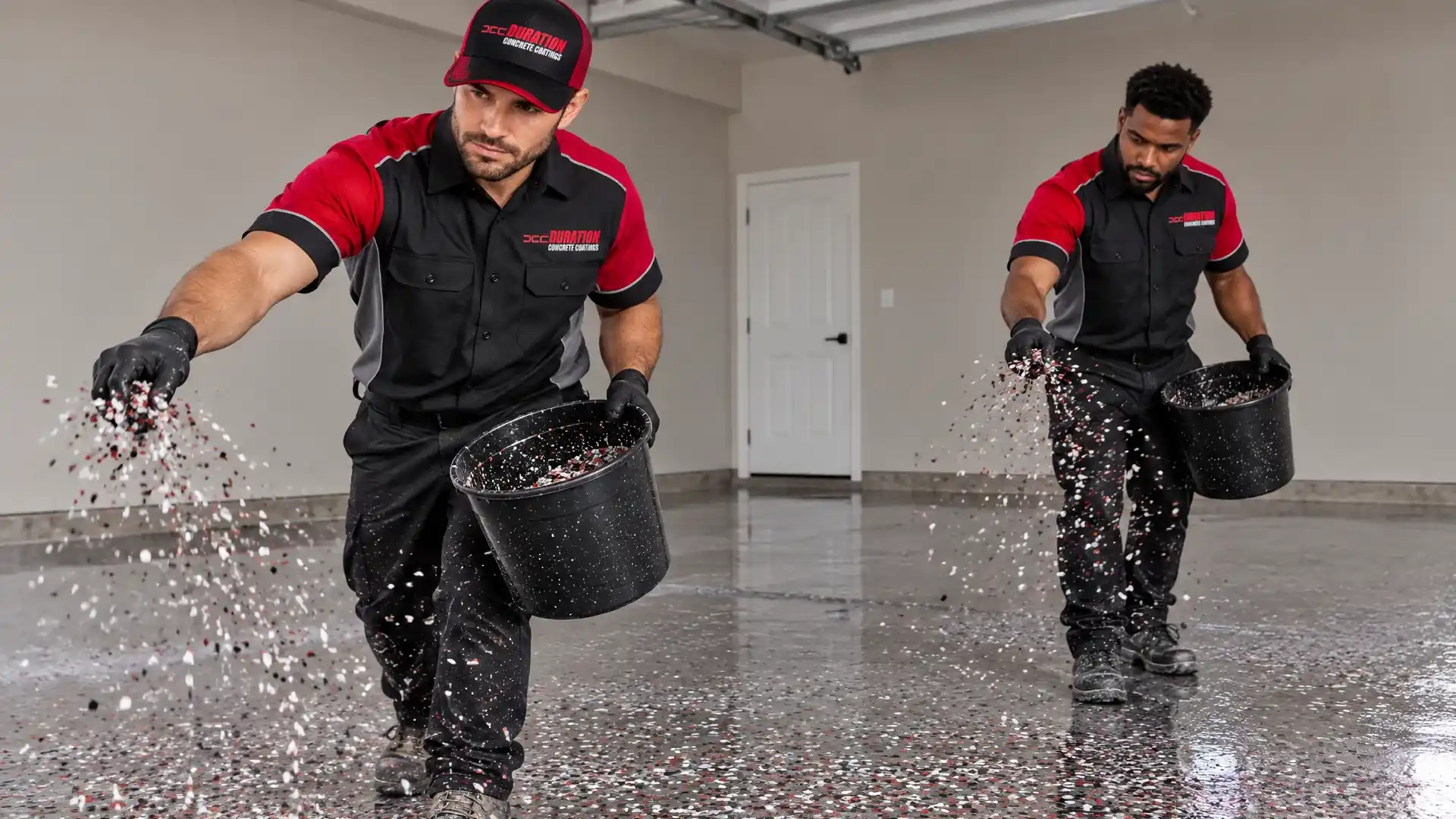
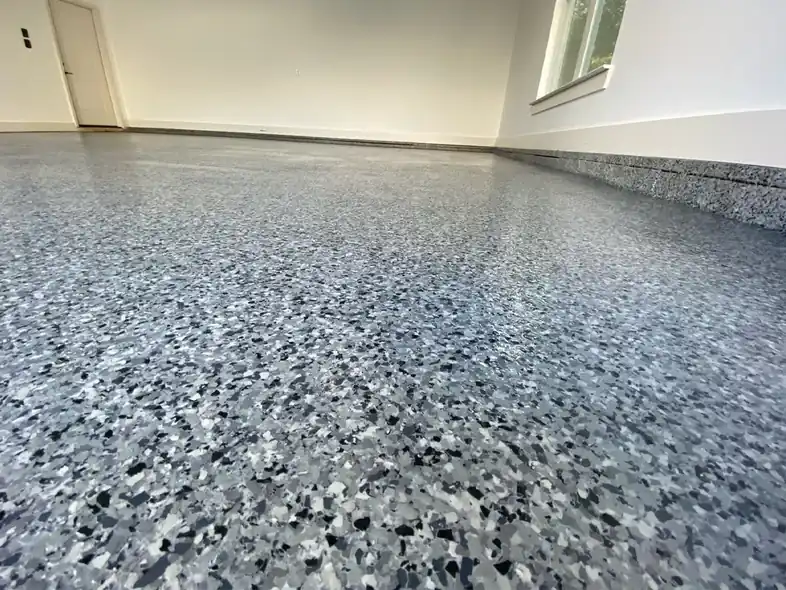
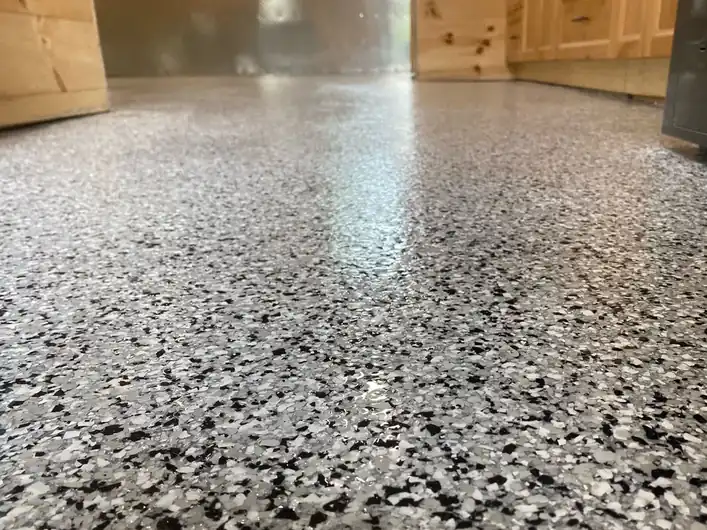
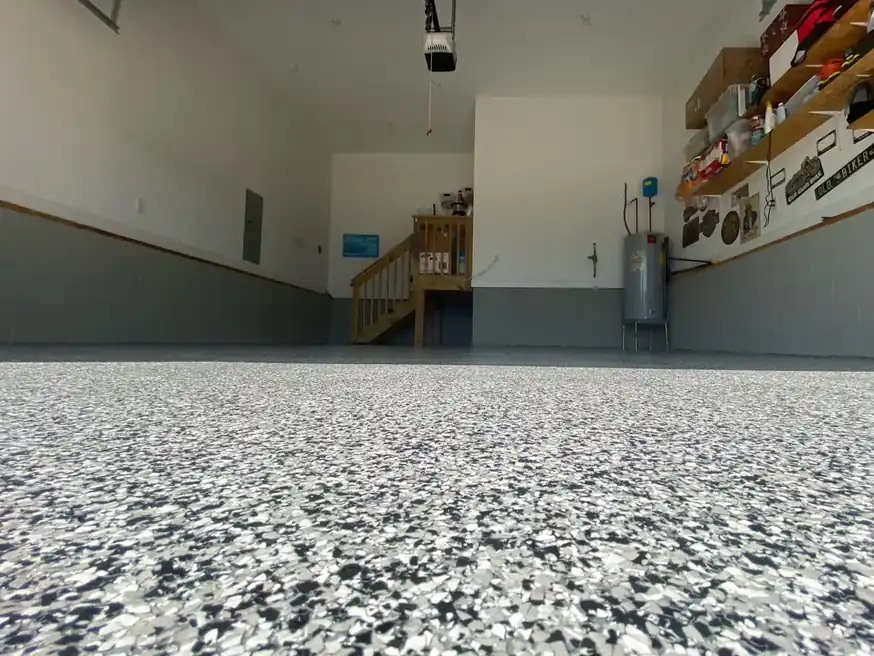
A pool deck has to be safe when it is wet and bearable when it is hot. We broadcast a texture into the coating for grip underfoot, a fine quartz or vinyl-flake aggregate that raises the wet slip resistance well past bare, sealed concrete, and the finished surface runs cooler than bare gray concrete in the sun. You choose the color and texture level, more texture for a busy family deck, a smoother finish for a patio-style look. A polyaspartic topcoat also holds its color under UV where a bare concrete sealer ambers and chalks within a season or two.
How We Build a Pool Deck Coating
On a sound deck we grind to a CSP 1 to 2 profile, repair the cracks and spalls, then build a polyaspartic system, typically 20 to 40 mils thick, with a broadcast quartz or vinyl-flake aggregate rolled in for grip. It walks in about 24 hours and takes full traffic in a couple of days, and it resists the chlorine, salt and shifting pool-water pH that chew through a bare concrete sealer. On a heavily spalled deck we build a cement-based resurfacing overlay first, feathered flush with the sound concrete, then coat over it. Where a slab has heaved more than about an inch or lost structural integrity, we recommend replacement instead of a coating.
How We Coat or Resurface a Pool Deck
Clean and Grind
Prep the deck and open the surface for a bond.
Repair
Chase cracks, patch spalls and scaling from past winters.
Resurface or Coat
Apply the overlay or coating system to the prepared deck.
Broadcast Texture
Add the slip-resistant texture and your color.
Seal and Inspect
Seal the surface and walk it with you.
When to Resurface a Pool Deck in Indiana
Fresh concrete repairs need time to cure, and a full concrete cure runs about 28 days. That makes late summer and fall a strong window: the deck is done and cured well before the first hard frost, and it is ready to go when you open the pool next season. Our polyaspartic coatings themselves cure fast, walk-ready in about 24 hours, so the coating step itself does not tie up your deck for long. We schedule around your pool season so the work is not competing with your summer.
Saltwater Pools and Coping Edges
A saltwater pool is harder on a deck than a chlorine pool: a salt system runs the water at roughly 3,000 parts per million of salt, brine that scales and pits bare concrete faster and wicks into coping and joint edges first. We seal the field of the deck and the coping and edges where the salt concentrates, and we detail the expansion joints with a flexible sealant so water and salt cannot track under the coating. On a spalled saltwater deck, that edge and joint work is often the difference between a coating that lasts and one that lifts at the perimeter.
What a Pool Deck Coating Costs
- Square footage of the deck.
- Condition, how much crack and spall repair the surface needs.
- Resurface vs coat, a heavily damaged deck needs an overlay, not just a coating.
- Texture and color you choose.
We price it in person with a free estimate.
Where We Install Pool Deck Coatings
We coat and resurface pool decks across Fort Wayne, Northeast Indiana and adjacent Northwest Ohio, including Fort Wayne, New Haven, Huntertown, Auburn, Leo-Cedarville and the surrounding communities. (See all service areas)
Our General Manager Is on Every Job
Founded in 2014, Duration keeps general manager Dan Diven on-site for every job, with a crew of 10 and 4,500 projects across Fort Wayne and Northeast Indiana, holding a 5.0 rating from 102 Google reviews.