Blog
Quick answer: For most Fort Wayne basements, the right coating is a polyaspartic system, not traditional epoxy. Epoxy is popular and affordable, but in a basement, where moisture, humidity, and Indiana’s freeze-thaw swings are a constant, it’s prone to peeling, yellowing, and cracking. A polyaspartic coating like Duralast is more moisture-tolerant, UV-stable, flexible, and cures quickly. That said, the single biggest factor in whether any basement coating lasts isn’t the product, it’s professional surface preparation.
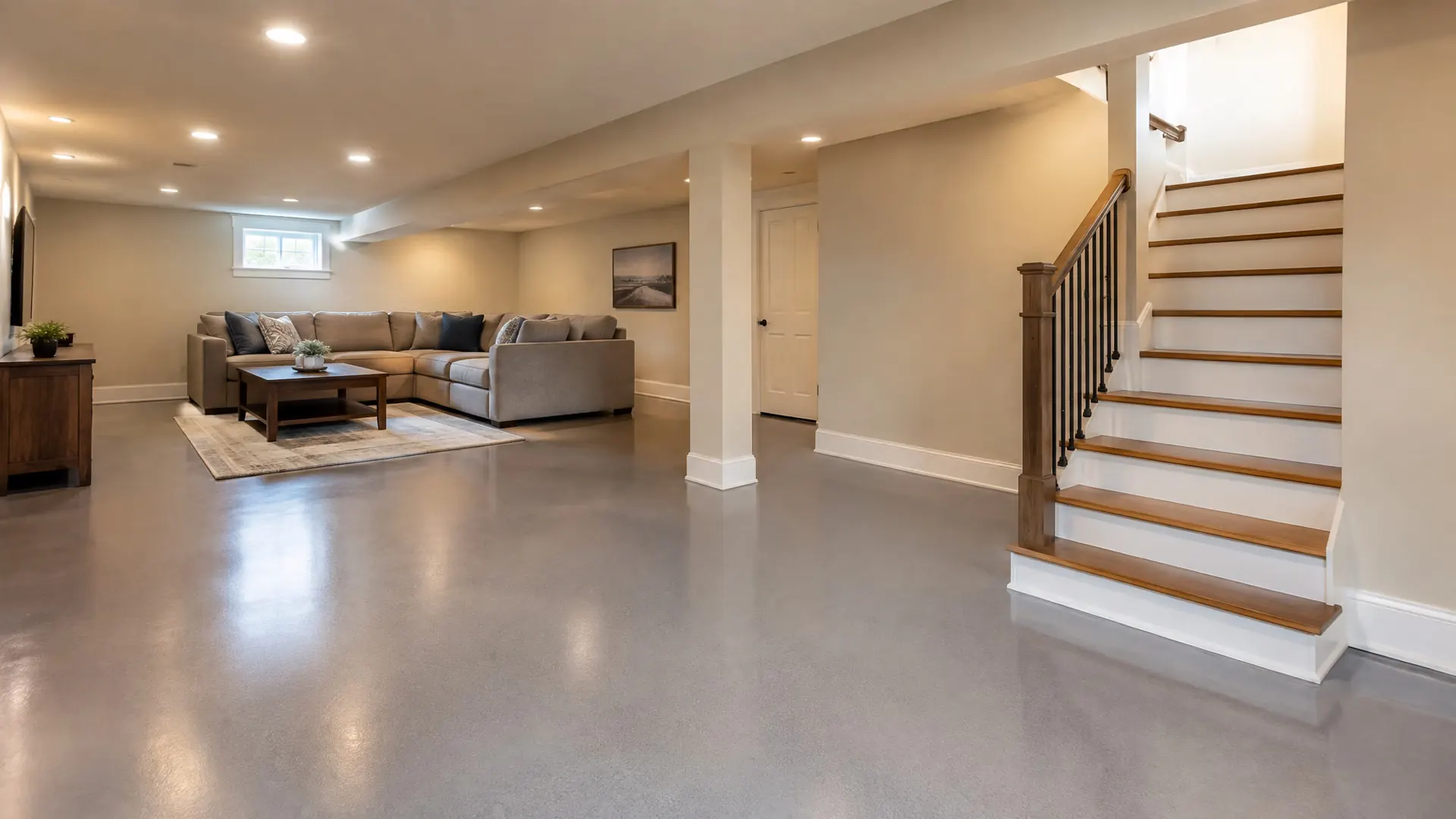
If you’re researching the right coating for a concrete basement floor, here’s the short version: for most homes, a polyaspartic coating outperforms epoxy in a basement. Epoxy isn’t a bad product, it’s just frequently the wrong tool for the damp, cold, temperature-swinging environment a basement actually is.
That goes against the common assumption that “garage and basement floor coating” automatically means epoxy. Below, we’ll explain what makes a basement unique, walk through the real coating options, and be honest about where epoxy falls short, so you can choose the right basement floor coating the first time.
Key Takeaways
- For most basements, polyaspartic beats epoxy on moisture tolerance, UV stability, and flexibility.
- Epoxy can peel, yellow, and crack in a damp, freeze-thaw basement environment.
- Polyaspartic (like Duralast) cures quickly and won’t yellow over time.
- Surface prep, professional diamond grinding, matters more than the product itself.
- The right choice depends on your slab; a professional assessment is the honest way to know.
What Makes a Basement Floor Different From a Garage?
People often assume the coating that works on a garage floor will work just as well in the basement. But the two spaces are very different environments, and a basement is harder on a coating in ways that aren’t obvious. The big one is moisture. Concrete below grade is in constant contact with the surrounding soil, so it can wick moisture up through the slab, and as the EPA notes, the key to controlling indoor mold is controlling moisture. A coating that traps or reacts poorly to that moisture is set up to fail.
On top of moisture, a Fort Wayne basement deals with high humidity, a cold slab that swings with the seasons, and Indiana’s relentless freeze-thaw cycles. Add the limited but real light from basement windows and fixtures, and you have an environment that punishes the wrong coating quickly.
The Main Basement Floor Coating Options
When homeowners shop for a basement floor coating, they’re usually choosing among a handful of options:
- Epoxy: a popular, affordable resin coating that bonds to concrete and creates a hard, glossy surface.
- Polyaspartic: a fast-curing, flexible, UV-stable coating (the category Duralast belongs to) engineered to outperform epoxy.
- Acrylic sealers and floor paint: the lowest-cost, thinnest options, easy to apply but short-lived.
- Tile or other finishes: attractive but vulnerable to basement moisture and far more involved to install and maintain.
Each has a place, but the two that homeowners weigh most seriously are epoxy and polyaspartic, so it’s worth understanding exactly where epoxy struggles.
Why Epoxy Isn’t Always the Answer
Let’s be fair to epoxy: it’s a proven, attractive, budget-friendly coating, and on a dry, well-prepped slab it can look great. The problem is that a basement rarely offers ideal conditions, and epoxy has four weaknesses that a basement tends to expose:
- Moisture sensitivity: epoxy can peel, bubble, or delaminate when moisture pushes up through the slab, exactly what basements do.
- Yellowing: epoxy ambers and yellows over time with any UV exposure, including basement windows and lighting.
- Brittleness: epoxy is rigid, so the constant expansion and contraction of Indiana’s freeze-thaw cycles can crack it.
- Slow cure: epoxy can take 24 to 72 hours to cure, leaving the floor, and your basement, out of commission for days.
None of this makes epoxy a scam. It just means that in a basement, epoxy is often working against its own weaknesses, which is why “just put down epoxy” isn’t always the right advice.
Basement Coating Options Compared
Here’s how the three most common choices stack up for a basement specifically:
| Factor | Epoxy | Polyaspartic (Duralast) | Paint / Acrylic Sealer |
|---|---|---|---|
| Durability | Strong | 5X stronger than epoxy | Weak |
| Moisture tolerance | Can peel if slab is damp | More forgiving | Poor |
| UV stability | Yellows over time | UV-stable, won't yellow | Fades |
| Freeze-thaw flexibility | Brittle | Flexible | Poor |
| Cure time | 24-72 hours | Quick | Fast but thin |
| Typical lifespan | Several years | Longest | Shortest |
Why Polyaspartic Is Usually the Right Basement Coating
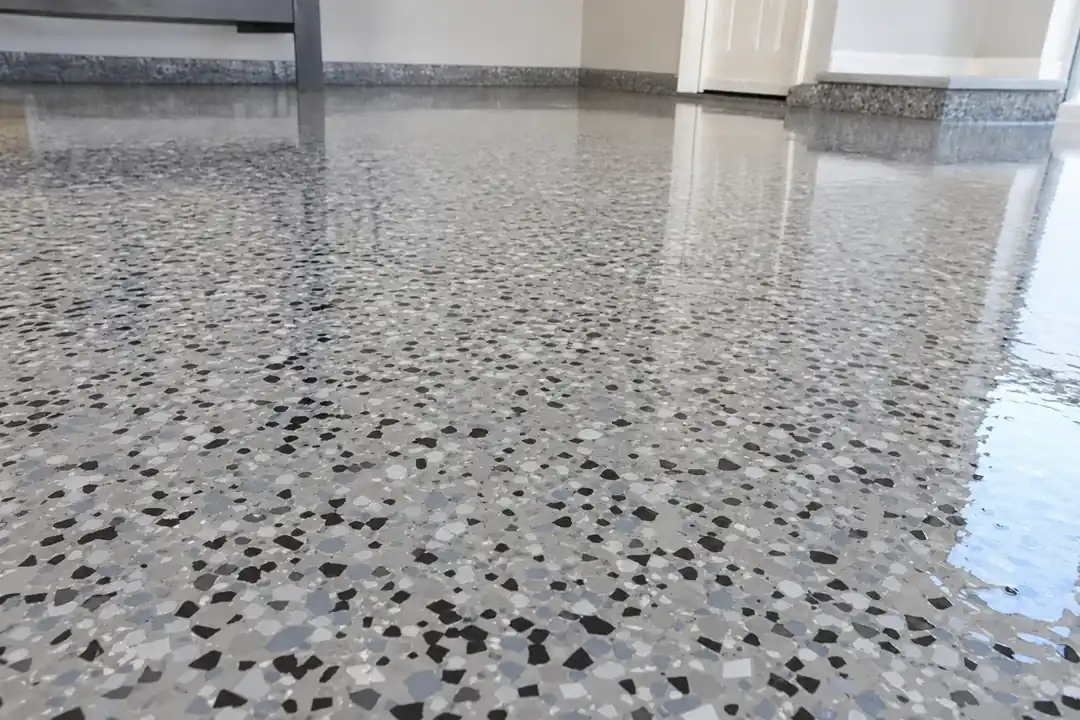
A polyaspartic coating addresses the exact weaknesses that trip up epoxy in a basement. The Duralast polyaspartic system is engineered to be roughly 5X stronger than traditional epoxy, and just as importantly for a basement, it’s:
- More moisture-tolerant: better suited to the damp reality of below-grade concrete.
- UV-stable: it won’t yellow or amber the way epoxy does.
- Flexible: it moves with the slab through freeze-thaw cycles instead of cracking.
- Fast-curing: it cures quickly, so you’re back to using your basement almost immediately.
That combination is why, for the majority of Fort Wayne basements, a polyaspartic system simply lasts longer and looks better over time than epoxy.
The Real Secret: It’s Not Just the Coating, It’s the Prep
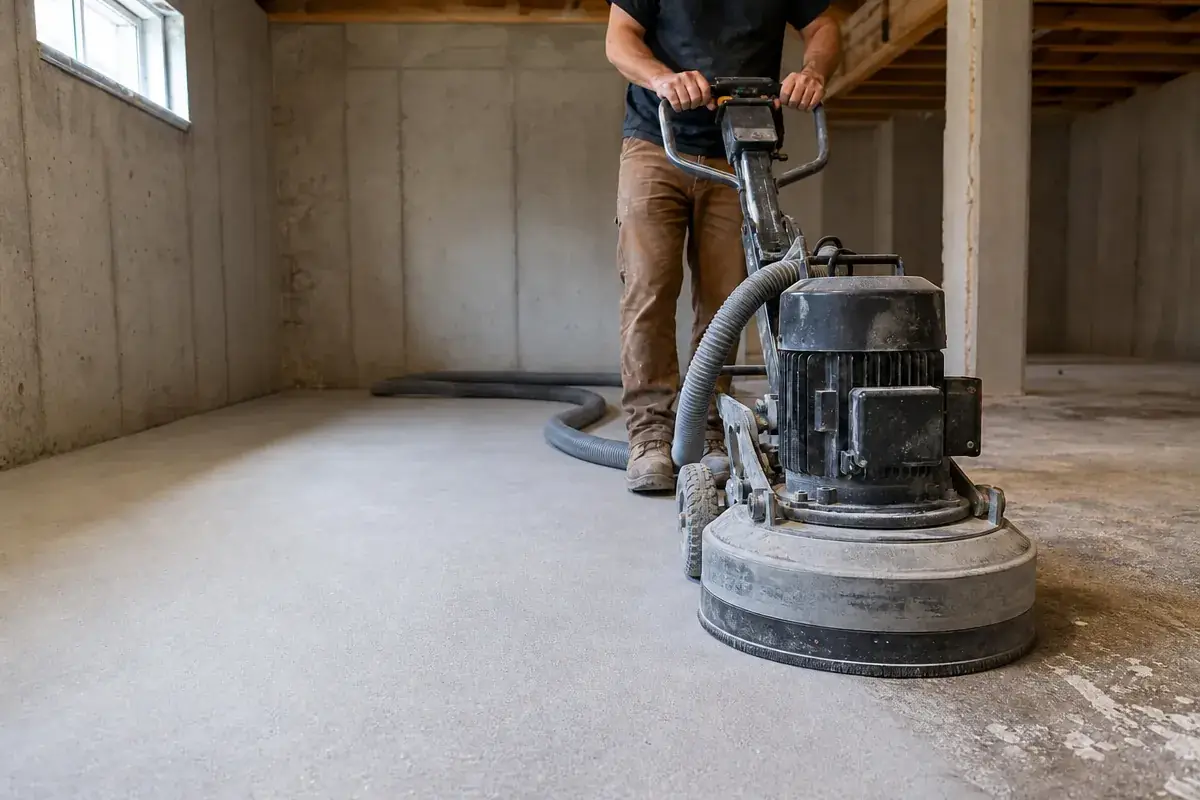
Here’s the part most homeowners never hear: even a top-grade coating will fail on a poorly prepared floor. The number one reason basement coatings peel isn’t the product, it’s inadequate surface prep. A coating can only bond as well as the concrete underneath it allows.
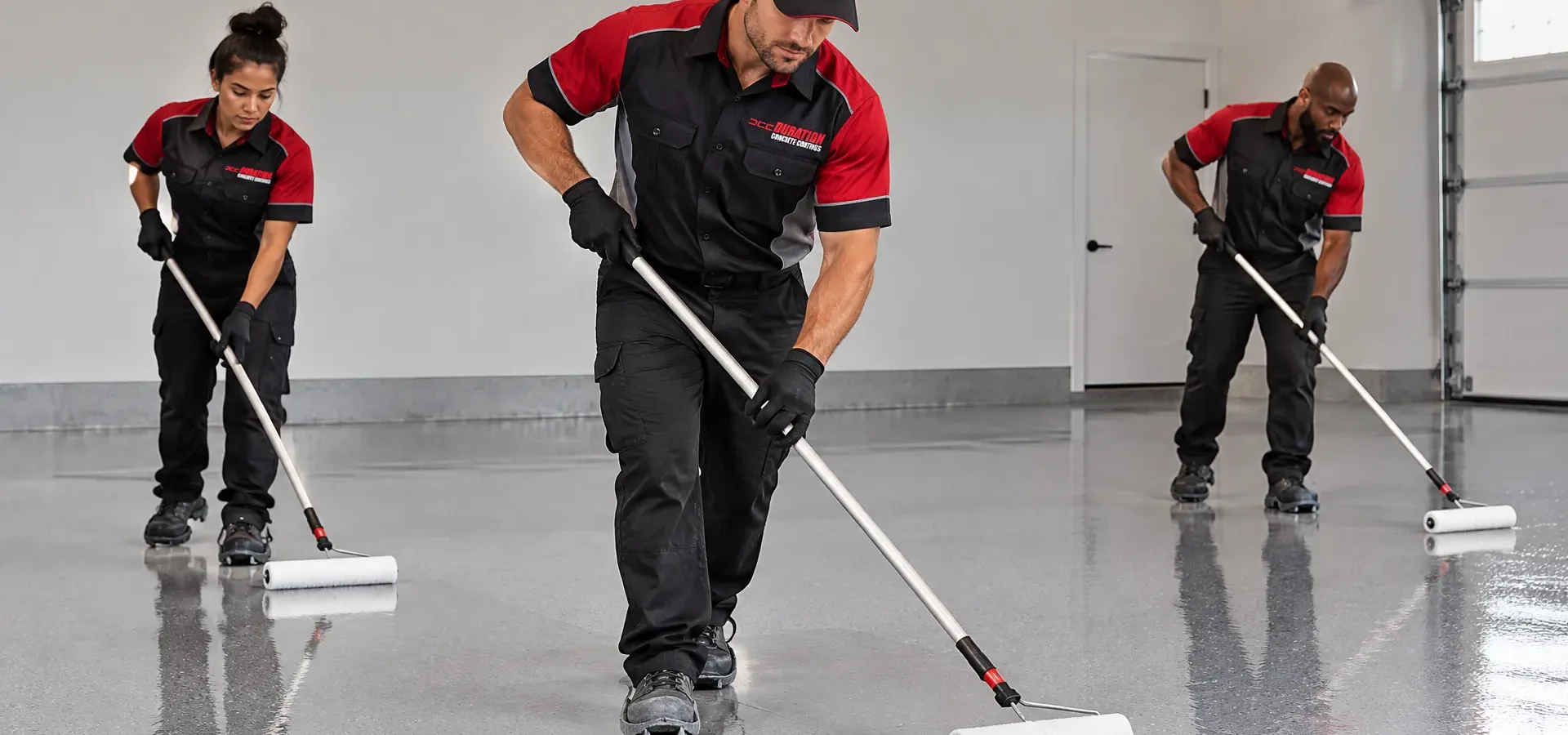
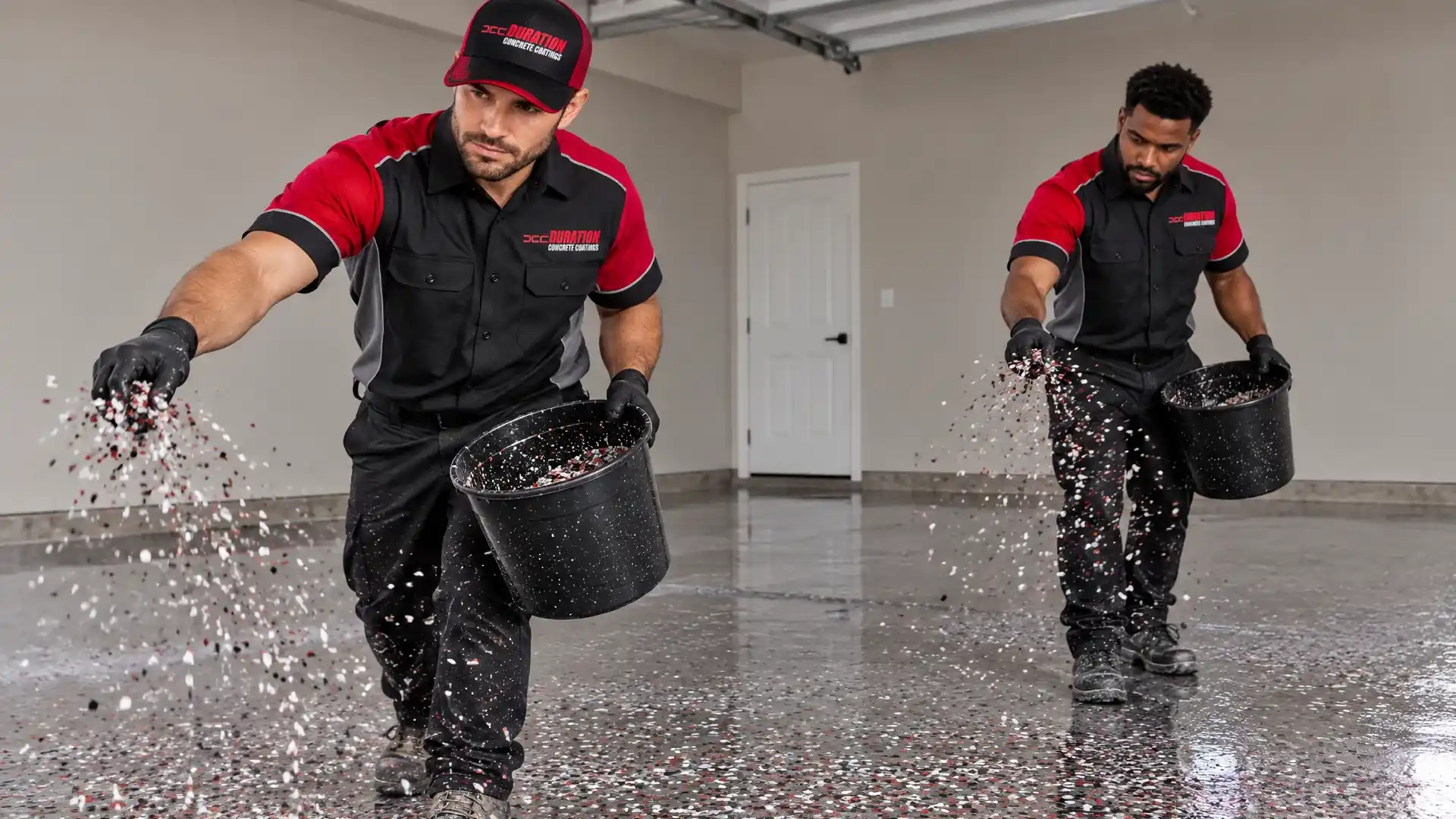
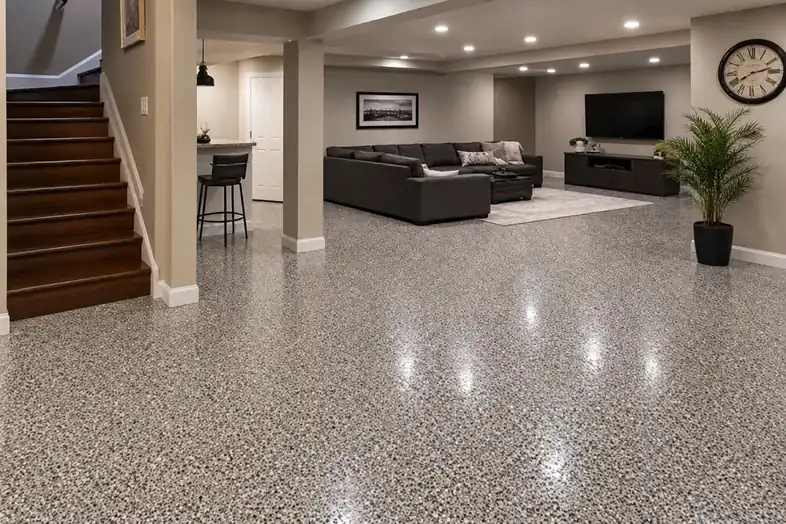
This is the difference between a professional installation and a weekend DIY kit. Duration prepares every floor with professional diamond grinding, which opens the concrete’s pores so the coating bonds mechanically rather than just sitting on top. From there, the full system, crack and pit repair, a polyurea basecoat, a broadcast of decorative vinyl chips, and a clear UV-stable polyaspartic topcoat, is built in layers for a finish that won’t peel, yellow, or fail in an Indiana winter. A painted-on coating over a slick, unground slab simply can’t compete.
So, Which Coating Suits Your Fort Wayne Basement?
The honest answer is that it depends on your specific slab, but for the large majority of basements, a professionally installed polyaspartic system is the strongest long-term value. It handles moisture, resists yellowing, flexes with the cold, and cures in a day.
Epoxy still has its place, particularly on a dry, stable slab or a tighter budget, and we’ll tell you honestly when it’s a reasonable option. The only way to know what your floor truly needs is to have it looked at by a professional who serves Fort Wayne and Northeast Indiana and understands our climate.
Basement Floor Coating in Fort Wayne, at a Glance
- For most basements, polyaspartic outperforms epoxy on moisture, UV stability, and flexibility.
- Epoxy can peel, yellow, and crack in a damp, freeze-thaw basement.
- Duralast polyaspartic is 5X stronger, UV-stable, flexible, and cures quickly.
- Professional diamond-grinding prep is what makes any coating last.
- Not sure what your slab needs? Call Duration Concrete Coatings at (260) 527-7744 or get a free quote.
Related Guides
- Basement Floor Coating in Fort Wayne, IN
- Polyaspartic vs. Epoxy Garage Floor Coating
- What Is Polyaspartic Floor Coating?
- The Duralast Polyaspartic System: A Review
- Basement Floor Coating Services
The Bottom Line
The right coating for a concrete basement floor usually isn’t the one you’ve heard of most, it’s the one built for the conditions a basement actually has. For damp, cold, freeze-thaw Fort Wayne basements, a professionally installed polyaspartic system beats epoxy on the things that matter: moisture tolerance, UV stability, flexibility, and cure time. And whatever coating you choose, insist on professional diamond-grinding prep, because that’s what makes it last.
Want a straight answer for your basement? Contact Duration Concrete Coatings for a free, no-pressure assessment, we’ll look at your slab and recommend the right coating for your home, not just the most expensive one.
About Duration Concrete Coatings: Duration Concrete Coatings by Duralast® is a Fort Wayne, Indiana concrete coating specialist serving Allen County and Northeast Indiana since 2014, with 4,500+ installations and a 5.0-star rating. Our proprietary Duralast® polyaspartic system, 5X stronger than traditional epoxy, UV-stable, and freeze-thaw resistant, is installed over professionally diamond-ground concrete and backed by a lifetime warranty. Call (260) 527-7744 for your free quote.