Blog
Quick Answer: The best garage floor coating maintenance tips follow the seasons. In winter, sweep grit and rinse road salt and slush promptly. In spring, deep clean with a soft broom and a neutral-pH cleaner. In summer, rely on a UV-stable topcoat and clear off hot asphalt residue. In fall, inspect for cracks, edge lifting, and thin spots before freeze-thaw cycles return. Year-round, avoid harsh deicers and abrasive cleaners, and wipe up puddles before they dry into a film.
Seasonal upkeep protects Fort Wayne garage floor coatings through Indiana’s freeze-thaw cycles and road-salt exposure. We recommend sweeping grit weekly, rinsing winter salt residue promptly, and inspecting polyaspartic topcoats each spring for chips. Duralast coatings resist yellowing and withstand temperature swings, but routine cleaning preserves adhesion and extends performance across all four seasons.
What Are the Key Takeaways for Seasonal Garage Floor Care?
- Coated floors require significantly less maintenance than uncoated concrete floors year-round.
- Fort Wayne’s seasonal temperature changes demand quarterly inspections to prevent coating damage and deterioration.
- Non-porous polyaspartic coatings resist salt, chemicals, and moisture that accumulate during winter months.
- Regular sweeping and mild soap cleaning every 2 weeks preserves coating appearance and longevity.
Why Does Fort Wayne Weather Stress Garage Floors?
Fort Wayne’s climate swings hard between seasons, and bare or poorly coated concrete pays the price. Summer heat softens asphalt that clings to tires. Winter brings freeze-thaw cycles that push moisture into every pore of unprotected slab. We select our coatings specifically to handle these temperature swings and the moisture challenges that come with Northeast Indiana weather. Without the right system, garages here take a beating twice a year instead of once.
Road salt compounds the problem. For homeowners dealing with Indiana’s freeze-thaw climate and winter salt exposure, we recommend polyaspartic coatings as the only system built to hold up long-term. Epoxy alone often can’t keep pace with that combination of chemical exposure and temperature cycling.
What Daily Habits Add the Most Wear?
Parking right after driving through slush or over hot, sticky asphalt does more damage than most homeowners realize. That residue slides off the vehicle and sits directly on the floor, grinding into the surface over time. Small daily habits like this add up fast across a long Fort Wayne winter.
Does Experience With Local Conditions Matter?
It does, and volume proves it. We’ve coated more than 800 floors across Allen County, giving us direct, repeated exposure to how local weather behaves on garage concrete year after year. That experience shapes every material and prep decision we make.
How Should You Handle Winter Salt and Snow?
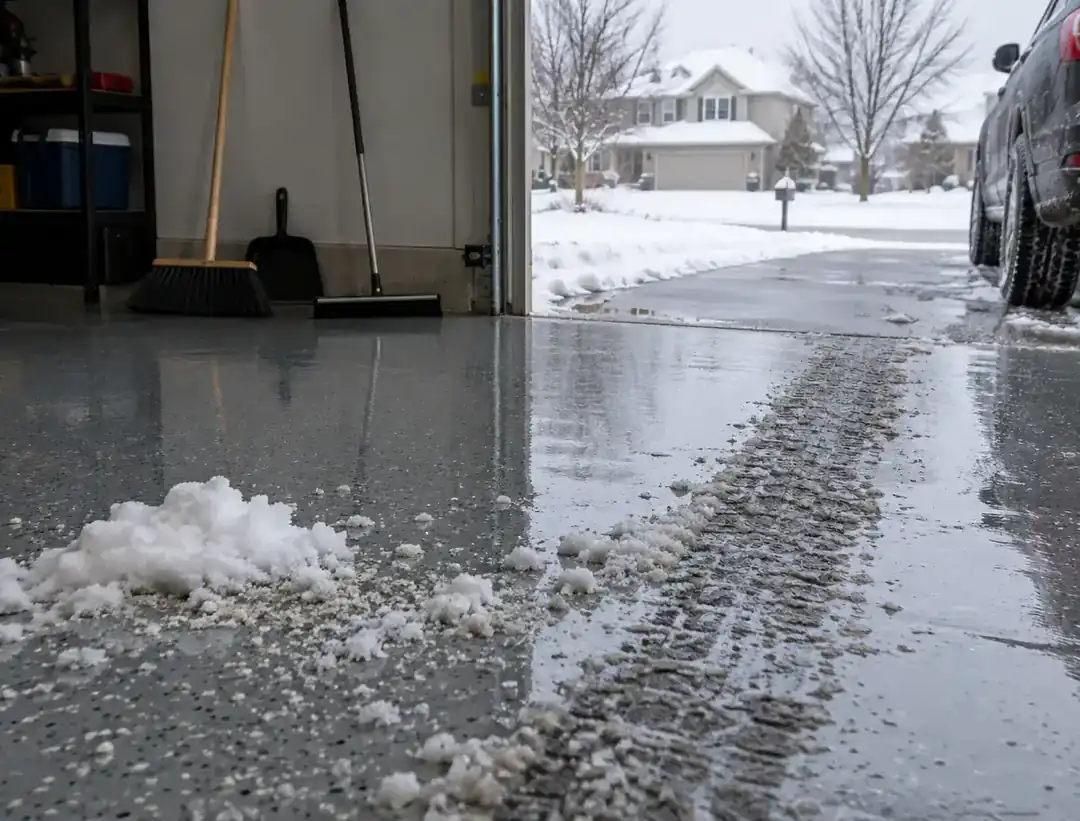
Polyaspartic coating stands as the only system we recommend for Fort Wayne garages facing freeze-thaw cycles and heavy road salt exposure. Indiana winters punish bare concrete and lesser coatings alike, and the difference shows up fast once temperatures start swinging.
Salt brine tracked in on tires does more than leave a white residue. Dust and dirt act like sandpaper against a coated floor. Liquids, including melted snow and salt runoff, stain and weaken the finish over time. Left unaddressed, that combination shortens the life of any garage floor coating.
We rely on our Duralast clear topcoat specifically because it resists yellowing and breakdown from repeated exposure, including the UV that streams through garage windows during winter months. Standard epoxy often fails under that same stress. Polyaspartic doesn’t.
How Often Should I Clean My Garage Floor in Winter?
Winter demands more frequent attention than any other season. Harsher conditions and heavier soilage mean dirt and salt build up faster. Cleaning schedules should tighten up, not loosen, once snow starts falling.
What’s the Best Way to Protect a Coated Floor From Salt Damage?
Rinse road salt and slush off the floor regularly rather than letting it dry into a film. These garage floor coating maintenance tips apply directly to Fort Wayne’s unpredictable winters:
- Sweep loose salt and grit before it grinds into the surface.
- Rinse with water on milder days to dissolve brine buildup.
- Wipe up melted snow puddles promptly to prevent staining.
- Avoid harsh deicers that aren’t rated for coated surfaces.
Consistent upkeep protects the investment Fort Wayne homeowners make every winter.
📞 Is Your Coating Ready for Another Season? Duration Concrete Coatings offers free on-site estimates for repairs, recoats, and new installs. Schedule your free estimate in Fort Wayne and Allen County.
What’s the Best Spring Cleaning Routine?
A thorough spring cleaning brings a coated garage floor back to its original look after months of winter buildup. Road salt, slush, and tracked-in grit settle into every corner of a Fort Wayne garage by March. Removing that layer is the single most effective step in any garage floor coating maintenance plan.
We start with a dry dust mop or soft-bristle broom to clear loose debris before any liquid touches the floor. Grit left underfoot acts like sandpaper, so clearing it first protects the topcoat during the wash. From there, a neutral-pH cleaner and warm water handle the rest.
Do Coated Floors Really Need Less Scrubbing Than Bare Concrete?
Yes. Coatings seal the concrete surface, so spills and dirt sit on top instead of soaking in. Because the finish is non-porous, a coated floor demands far less scrubbing and fewer harsh chemicals than untreated concrete.
How Often Should Fort Wayne Homeowners Deep-Clean the Garage Floor?
One seasonal deep clean each spring, paired with light sweeping throughout the year, keeps most coatings performing well. Garages used for workshops or heavy equipment may need a mid-year touch-up.
A simple spring checklist:
- Sweep or dust-mop to remove salt and grit
- Mop with a neutral-pH cleaner and warm water
- Rinse thoroughly to prevent residue buildup
- Dry the surface to avoid slip hazards
Consistent upkeep like this extends coating life and preserves appearance for years. For homeowners running spring projects, Duralast polyaspartic resists abrasion well beyond standard epoxy. It holds up to tool drops, foot traffic, and seasonal wear without losing its finish.
How Do You Protect Floors During Summer Heat?
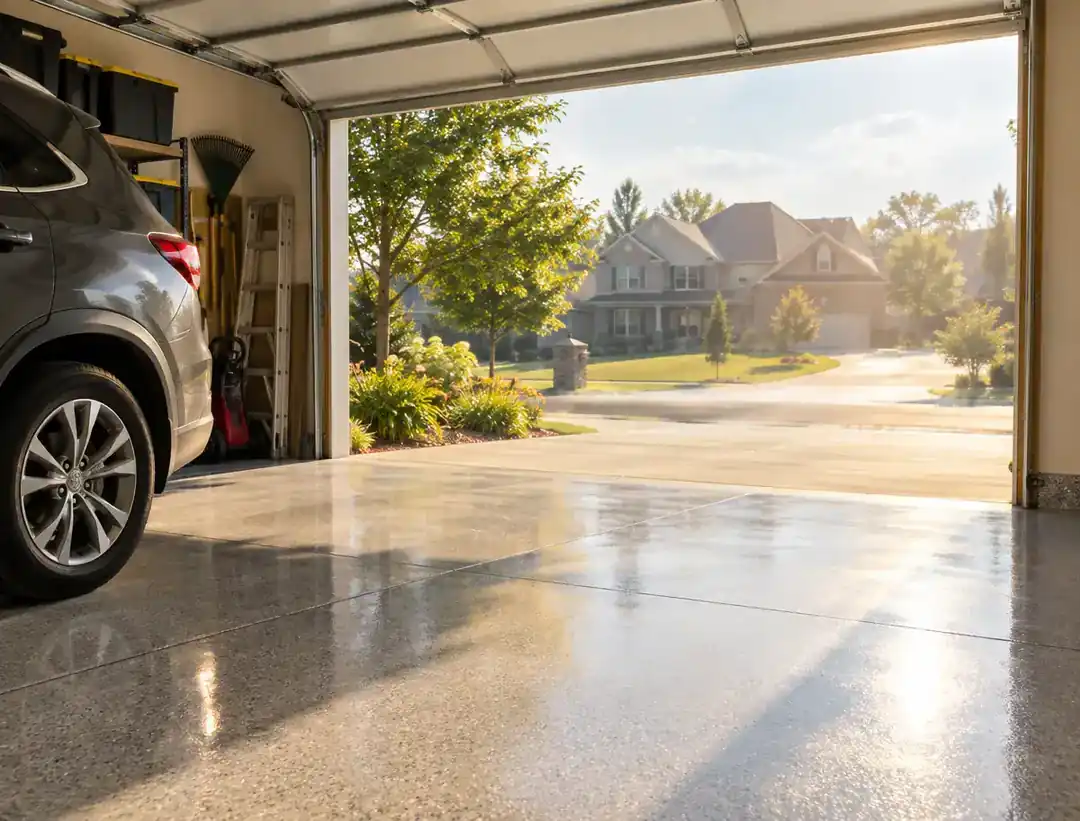
UV-stable topcoats protect Fort Wayne garage floors from the sun pouring through open garage doors all summer long. Standard epoxy yellows and degrades under that kind of exposure. Our Duralast clear topcoat holds its color and clarity even through months of direct sunlight. The polyaspartic chemistry resists UV breakdown at a molecular level.
That matters more in summer than any other season. Garage doors stay open for yard work, grilling, and weekend projects. Sunlight hits the floor for hours at a stretch. A coating that can’t handle UV exposure turns amber or cloudy within a season or two. We build our systems specifically to avoid that failure point.
Does Hot Weather Affect Coating Installation?
Heat actually speeds up curing rather than hurting it. Fast-curing polyaspartic systems let vehicles return to the garage within 24 hours of application, making summer an efficient window for a floor refresh. Homeowners planning a quick project before a vacation gathering or family visit benefit from that turnaround.
What Makes a Coating Durable Enough for Fort Wayne Summers?
Durability starts before the coating ever gets applied. We use diamond-grinding surface preparation to open the concrete’s pores and create a mechanical bond strong enough to withstand Indiana’s freeze-thaw swings between seasons. That foundation matters as much in July heat as it does in January cold.
We also avoid treating every garage the same way. Rather than applying one generic product across every job, we match the coating system to the room and to Fort Wayne’s climate conditions. That approach, paired with proper surface prep, keeps floors performing through heat waves, humidity, and everything Northeast Indiana weather brings.
What Fall Prep Keeps Floors Ready for Winter?
Fall inspection catches small slab issues before freeze-thaw cycles turn them into bigger problems. We treat autumn as the window for assessing a Fort Wayne garage floor before road salt, slush, and sub-freezing nights arrive. Slab condition drives coating performance more than square footage ever will. A crack or hairline chip spotted in October matters more than the floor’s total size.
That’s why we start every job, repair or full install, with a free on-site estimate. A Fort Wayne homeowner gets a direct look at how the existing garage floor coating maintenance tips we recommend actually apply to their slab, not a generic checklist. We check for moisture intrusion, edge lifting, and any spots where the old coating has thinned from tire traffic.
Does a Fall Inspection Really Make a Difference Before Winter?
Yes. Cold Indiana winters punish weak spots in concrete, and freeze-thaw cycles widen existing cracks fast. Catching those issues in September or October, while temperatures still allow proper curing, keeps small repairs small.
Our fall walkthrough typically covers:
- Checking for cracks, pitting, or spalling around the slab edges
- Testing adhesion at high-traffic zones near the garage door
- Looking for moisture signs that signal a vapor barrier issue
- Confirming the topcoat still carries UV-stable protection against yellowing
What Gives Homeowners Confidence Heading Into Another Winter?
A written lifetime warranty on properly installed coatings backs every job we complete. That guarantee matters most in Fort Wayne, where freeze-thaw stress tests a floor’s adhesion all winter long. Our 5.0-star Google rating reflects the trust local homeowners place in that seasonal guidance, project after project, year after year.
TL;DR — Seasonal Garage Floor Coating Maintenance at a Glance
- Winter: sweep grit, rinse road salt and slush promptly, and avoid harsh deicers.
- Spring: dust-mop first, then deep clean with a neutral-pH cleaner and warm water.
- Summer: a UV-stable polyaspartic topcoat resists yellowing; clear off hot asphalt residue.
- Fall: inspect for cracks, edge lifting, moisture, and thin spots before freeze-thaw season.
- Proper diamond-grinding prep and the right coating system make maintenance easier year-round.
- Next step: Schedule a free on-site estimate with Duration Concrete Coatings.
Related Resources
- Garage Floor Coating
- New Haven, IN Concrete Coatings
- Garage Floor Coating and the Freeze-Thaw Cycle
- Best Garage Floor Coating for Cold Climates
- UV-Resistant Garage Floor Coating
- Tips to Prevent Chips and Ensure Long-Lasting Durability
Get a Free Garage Floor Coating Estimate
In closing, seasonal maintenance of your garage floor coating protects your investment and extends the lifespan of your protective system throughout Fort Wayne’s variable climate. By implementing these straightforward practices, regular cleaning, prompt attention to damage, and strategic preparation for temperature shifts, you preserve the durability and appearance your coating was engineered to deliver. A well-maintained coated floor remains a reliable, attractive asset for years to come, requiring only consistent care to perform at its best.
Contact Duration Concrete Coatings today for a free, no-obligation estimate on garage floor coating care, repair, or installation in Fort Wayne.
About Duration Concrete Coatings: Duration Concrete Coatings by Duralast® is a Fort Wayne, IN concrete coating company serving Allen County and Northeast Indiana. The team installs Duralast® polyaspartic floor systems with professional diamond-grinding prep for garages, basements, and commercial spaces. Contact Duration Concrete Coatings for a free estimate.