Blog
Quick Answer: To repair a chipped garage floor coating, clean the chip with a mild degreaser, lightly sand the edges with 120-grit sandpaper so they feather into the surrounding finish, let the spot dry completely, then apply a repair product matched to your existing coating in thin layers and let it cure fully before driving on it. This works for small, cosmetic chips and scratches confined to the topcoat. If chips expose bare concrete in several places, edges lift when pressed, or damage keeps spreading, the coating has likely lost its bond to the concrete, and a professional evaluation is the better next step.
A chip or scratch in a garage floor coating doesn’t always mean the whole floor has failed. Most minor damage comes from dropped tools, jack stands, or equipment striking the surface, and many of those spots can be patched in an afternoon. The key is telling cosmetic damage apart from a bonding problem before you buy supplies. This guide walks Fort Wayne and Northeast Indiana homeowners through what to gather, how to diagnose the damage, how to fix minor chips, and when to call a pro.
What Are the Key Takeaways on Repairing a Chipped Garage Floor?
- Epoxy floor chips and cracks should be repaired promptly to help prevent further damage and deterioration of your coating.
- Duration Concrete Coatings in Fort Wayne addresses peeling, bubbling, and chipped epoxy through straightforward repair and recoating options.
- Epoxy coatings withstand heavy use and impact, but environmental factors and everyday wear can make timely professional restoration necessary.
- Small, cosmetic chips can often be patched at home, while widespread chipping or peeling usually points to an adhesion problem that needs a pro.
What Do You Need Before Starting Repairs?
Basic supplies handle most minor chip damage without a full recoat. Dropped tools, machinery, or equipment striking the floor account for a large share of chips and dents homeowners discover in their garage. A small patch kit resolves many of these cases.
Before gathering materials, assess the damage. Surface-level chips that haven’t exposed bare concrete typically respond well to a basic repair kit. Deeper gouges or widespread cracking call for professional evaluation. For homeowners attempting a patch job, we recommend assembling the following:
- A clean rag and mild degreaser to remove dirt and oil from the chip site
- 120-grit sandpaper to feather the edges of the damaged coating
- A compatible patch compound matched to the existing coating type
- A small applicator or putty knife for smoothing the repair
- Painter’s tape to mask the surrounding finish during application
Patch compounds and coating products can contain resins and solvents, so open the garage door for ventilation, wear gloves and eye protection, and follow the product label. OSHA’s overview of chemical hazards in painting and coating materials and its technical manual chapter on polymer matrix materials and resins explain why skin protection and fresh air matter when handling two-part products.
Can I Match the Repair to My Existing Coating?
Matching matters more than most homeowners expect. Epoxy and polyaspartic coatings cure differently, so mixing products often leads to poor adhesion or visible color mismatch. If you aren’t sure what’s on your floor, our team can help identify the existing coating and confirm compatibility during a free on-site estimate before you buy supplies.
Being based in Fort Wayne, Indiana also means professional consultation sits close by if a chip turns out larger than expected. When a full recoat becomes necessary, our Duralast polyaspartic coating system cures fast enough for vehicles to typically return to the floor within about 24 hours.
How Do You Diagnose the Damage First?
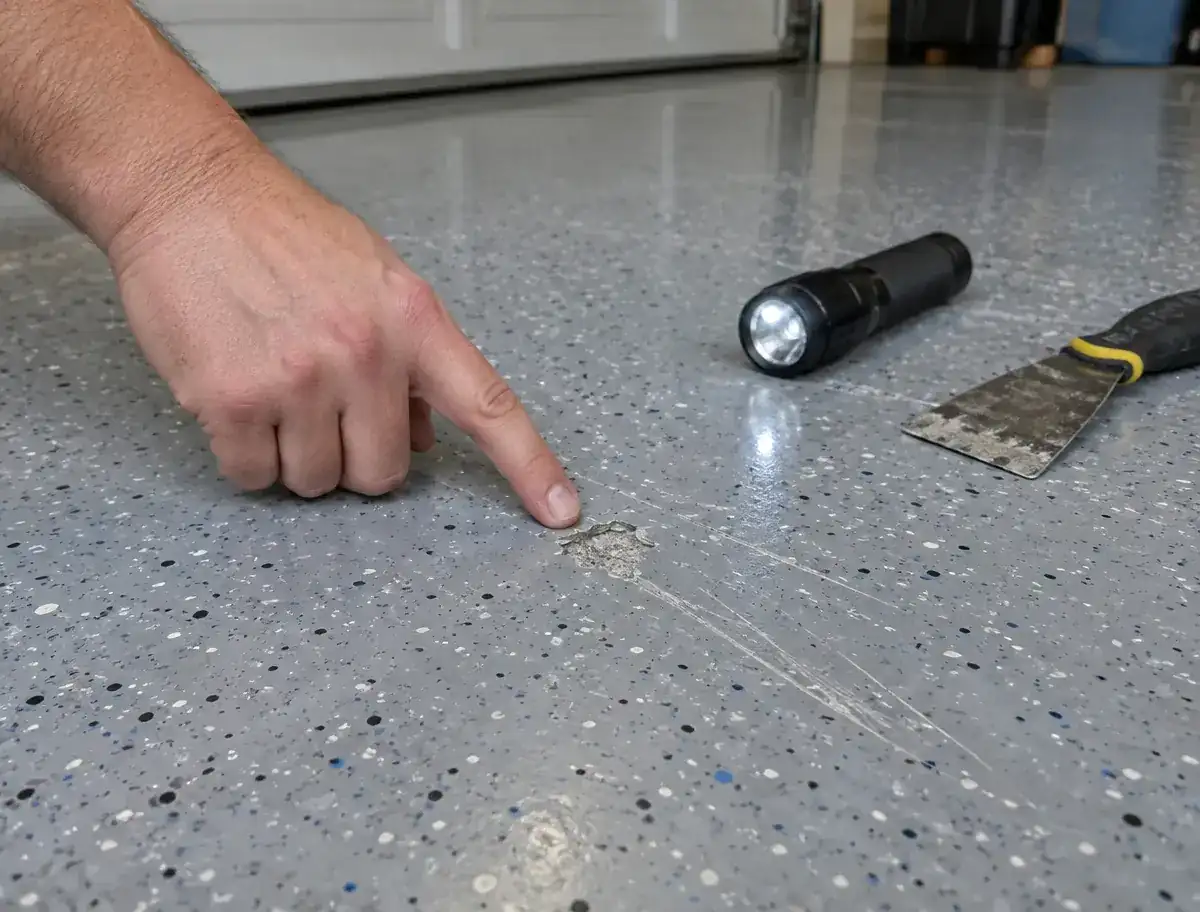
Damage type determines the fix. A true surface scratch stays shallow and cosmetic, while peeling signals a failure at the bond line between coating and concrete. Distinguishing the two before any repair work begins saves time and prevents a patch job from failing again within months.
Peeling happens when the chemical bond between the coating and the concrete substrate breaks down completely. This differs sharply from a scratch, which only affects the topcoat and leaves the underlying bond intact. Chips and cracks fall somewhere in between: localized damage that may or may not reach the substrate.
What Causes Peeling to Spread Across a Garage Floor?
Peeling rarely starts as one isolated spot. In most cases, the root cause traces back to inadequate concrete preparation during the original installation, one of the main reasons why epoxy garage floors peel. Our teams treat this as the leading suspect whenever we assess a floor with spreading failure. Poor prep compromises adhesion across the whole slab, not just one section. Industry groups such as the International Concrete Repair Institute (ICRI) publish technical guidelines on concrete surface preparation for this reason.
How Do We Know If a Floor Was Installed Correctly?
We judge installation quality against two standards: diamond-grinding surface preparation and a written warranty covering adhesion. A floor built on these markers typically shows isolated, repairable damage rather than widespread bond failure. Professional installers also work from recognized practices, including standards developed by ASTM Subcommittee D01.46 on industrial protective coatings and concrete preparation.
Before assuming a simple patch will work, run through this checklist:
- Press on the damaged area; flaking that lifts cleanly off bare concrete points to bond failure.
- Check whether damage is confined to one spot or spreading outward.
- Confirm whether the original installer used diamond-grinding prep and offered a written warranty.
That diagnosis decides whether a homeowner repair or a professional contractor call comes next.
📞 Not Sure What You’re Looking At? Schedule a free on-site estimate and Duration Concrete Coatings by Duralast will tell you whether your chip is a quick touch-up or a sign of bond failure, before you spend money on supplies.
How Do You Fix Minor Chips Yourself?
Small chips and minor surface scratches in an otherwise sound coating typically respond to a focused repair, without demanding a full floor replacement. A homeowner facing this kind of damage in Fort Wayne or Northeast Indiana can often restore the finish with a short, controlled process rather than tearing out the entire garage floor.
Before starting any touch-up, confirm the damage stays cosmetic and is not a sign of adhesion failure spreading beneath the surface. Deep peeling or lifting at the edges signals a bonding problem a simple patch will not solve. Once a minor chip is confirmed, follow these steps:
- Clean the chipped area thoroughly with a degreaser to remove oil, dirt, and loose coating fragments.
- Sand the edges of the chip lightly to create a feathered transition into the surrounding coating.
- Wipe the area dry and let it sit until fully moisture-free.
- Apply a matching repair product in thin layers, building up to the original coating thickness.
- Let the patch cure fully before driving or parking a vehicle over it.
Does the Repair Product Need to Match the Original Coating?
Yes, matching the repair product to the original system matters for long-term performance. Our Duralast topcoat is built as a UV-stable polyaspartic system engineered for Indiana’s freeze-thaw climate. Any touch-up product should meet that same standard. A mismatched patch cures differently, discolors over time, or fails to bond, leaving a visible and vulnerable spot behind.
Homeowners unsure whether a chip qualifies as a do-it-yourself fix should not guess at the answer. Every Duration project starts with a free on-site estimate, giving local homeowners a no-cost way to confirm whether damage calls for a quick touch-up or a professional repair done the right way.
When Does Chip Damage Need a Pro?
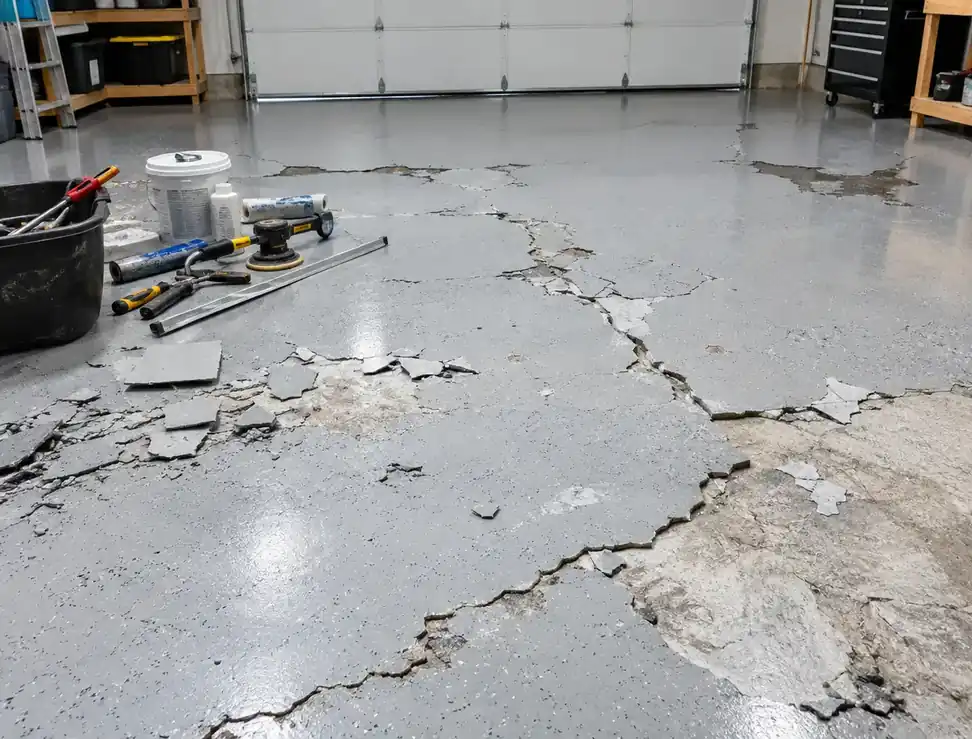
A single chip the size of a coin, confined to the topcoat, usually responds to a small touch-up kit. Chipping that spreads across a tire path and exposes bare concrete underneath points to a bonding problem that a homeowner repair won’t fix. We’ve walked through this distinction with Fort Wayne garage owners for years. The pattern holds: cosmetic damage stays small, while adhesion failure grows.
Understanding how to repair a chipped garage floor coating at the surface level is different from resurfacing a damaged section correctly. Epoxy is a two-part product that depends on an exact resin-to-activator ratio. Mixing a patch batch without professional equipment often introduces new imperfections, like uneven sheen, soft spots, or a visible seam around the repair. Larger repairs often start by grinding the damaged area back to sound concrete, work best left to trained crews with proper equipment and dust control, as OSHA’s safety fact sheet on walk-behind floor grinders makes clear.
Our crews have installed the Duralast polyaspartic system on garage floors across Allen County. That volume of work means we see the difference between a shallow cosmetic chip and widespread bonding failure almost immediately on inspection.
How Do I Know If My Garage Floor Needs a Full Recoat Instead of a Patch?
Check whether chips cluster in one traffic lane or scatter across the entire slab. Scattered chipping, bubbling, or lifting edges usually means the original coating never bonded correctly to the concrete. In that case, patching delays the inevitable and wastes material.
We match the coating system to the specific room and to Fort Wayne’s climate, rather than applying one product to every floor. Call in professional help when:
- Chips expose bare concrete across more than one small spot
- Edges around the damage lift or peel when pressed
- The coating feels soft or tacky near the chipped area
How Do You Prevent Future Chipping?
Prevention starts with the coating system itself. We install Duralast polyaspartic coatings engineered to be up to 5X stronger than standard epoxy, which lowers the odds of chipping under normal garage traffic. A properly installed coating also delivers an attractive, durable, easy-to-clean surface that holds up against the daily wear patterns that cause chronic chipping when floors go unmaintained.
What Should Homeowners Do to Protect Their Floor Long-Term?
We recommend scheduling a free on-site estimate before small chips turn into structural failures. This evaluation lets us assess wear early and plan a preventive recoat on your timeline, not during an emergency.
Beyond professional evaluation, we suggest these habits:
- Use furniture pads or rubber mats under heavy equipment and jack stands
- Sweep grit regularly to prevent abrasive scratching
- Avoid dragging metal tools or sharp-edged objects across the surface
- Schedule periodic inspections to catch early wear before it spreads
Consistent care, paired with a stronger base system, keeps garage floors performing for years. For more habits, see our guide to preventing chips and extending coating life.
TL;DR — Garage Floor Chip Repair at a Glance
- Small chips and scratches confined to the topcoat can usually be patched at home with a degreaser, 120-grit sandpaper, and a matched repair product.
- Diagnose first: flaking that lifts cleanly off bare concrete points to bond failure, not a cosmetic chip.
- Match the repair product to the original coating, since epoxy and polyaspartic cure differently.
- Spreading chips, lifting edges, or soft, tacky areas call for a professional evaluation.
- Prevent future damage with mats, regular sweeping, and periodic inspections.
- Next step: schedule a free on-site estimate with Duration Concrete Coatings by Duralast to find out whether your floor needs a touch-up or a recoat.
Related Resources
- Garage Floor Coating
- Garage Floor Coating in Fort Wayne, IN
- Can Damaged Epoxy Flooring Be Repaired?
- Polyaspartic vs. Epoxy Durability
- Road Salt Damage on Concrete Garage Floors
- Epoxy Flooring Durability
Ready to Get a Free Garage Floor Repair Estimate?
The decision between a homeowner touch-up and professional intervention rests on an honest assessment of the damage itself. Minor cosmetic chips confined to the topcoat respond to focused repair. Widespread chipping, lifting edges, or exposed concrete signal adhesion failure that patching cannot resolve. Duration Concrete Coatings by Duralast will evaluate your floor’s condition at no cost and recommend the right solution to protect your investment and restore your garage across Northeast Indiana. Contact Duration Concrete Coatings by Duralast today for a free, no-obligation quote.
About Duration Concrete Coatings by Duralast: Duration Concrete Coatings by Duralast is a Fort Wayne, Indiana concrete coating company specializing in garage, basement, patio, and commercial floor coatings built on professional diamond-grinding prep and the Duralast® polyaspartic system. The team serves Fort Wayne, Northeast Indiana, and Northwest Ohio. Contact us today for a free, no-obligation on-site estimate.