Blog
Quick Answer: To clean a polyaspartic garage floor, dust-mop or sweep with a soft-bristle broom, then wash with warm water and a mild pH-neutral cleaner, free of ammonia or bleach, using a microfiber mop. Wipe up oil, road salt, and other spills right away, and do a full scrub-and-rinse deep clean every three to four months. Because the coating seals the concrete, stains sit on top instead of soaking in, so harsh degreasers, acids, and abrasive pads are not needed.
Polyaspartic garage floor cleaning requires only regular dust mopping plus occasional washing with a pH-neutral cleaner and warm water, since our Duralast® coatings seal concrete into a non-porous surface. We never recommend harsh degreasers or abrasive pads, because dirt, oil, and road salt sit on top rather than abs
What Are the Key Takeaways on Cleaning a Polyaspartic Floor?
- Polyaspartic coatings create non-porous sealed surfaces that prevent dirt, grime, and oil from penetrating concrete.
- Duration Concrete Coatings’ 1-day installation system transforms stained concrete into a maintenance-free, easy-to-clean floor.
- Regular cleaning requires only simple sweeping and occasional mild detergent washing for optimal appearance.
- Sealed polyaspartic floors resist staining and require significantly less maintenance than uncoated concrete surfaces.
What Do You Need Before You Start Cleaning?
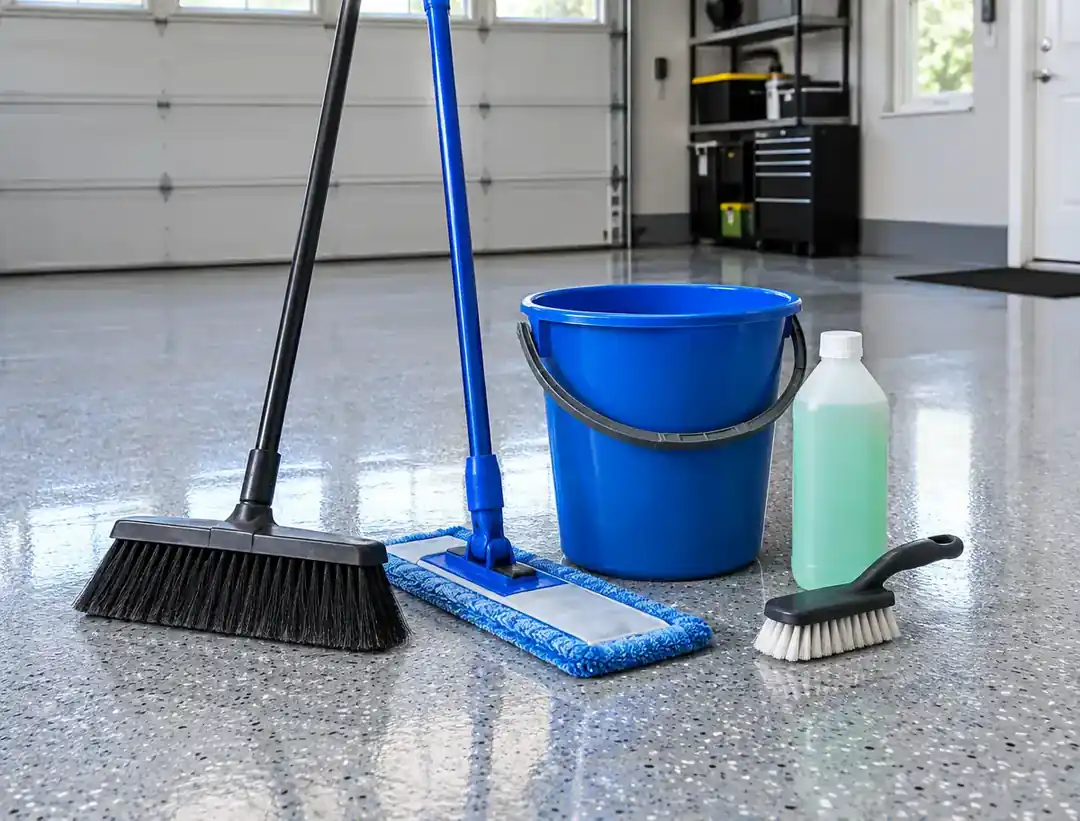
Minimal supplies answer this question directly: a soft bristle broom, a microfiber mop, warm water, and a mild pH-neutral cleaner. Duration Concrete Coatings built our Duralast polyaspartic system to skip the elaborate cleaning kit homeowners associate with older garage floor finishes. Expensive equipment and harsh chemicals play no role in keeping a polyaspartic garage floor looking new.
Before gathering supplies, confirm the coating has fully cured. Duralast polyaspartic cures fast enough that vehicles return to the garage within 24 hours of application, compared with three to seven days of downtime for standard epoxy. That quick turnaround means homeowners resume normal traffic, and a normal cleaning routine, almost immediately.
Will Regular Cleaning Tools Scratch the Coating?
No. Duralast polyaspartic carries abrasion resistance rated up to 5X stronger than standard epoxy, built for heavy residential and light commercial use. Soft brooms, microfiber mop heads, and standard scrub pads will not mar or dull the surface during routine maintenance.
Does Sunlight Through Garage Windows Change How the Floor Cleans Up?
Sunlight will not change how the floor looks between cleanings. The Duralast clear topcoat resists UV exposure and will not yellow or degrade, a common failure point for standard epoxy coatings. That stability keeps color and sheen consistent from one cleaning session to the next, with no fading to track or correct.
Gather this short list before the first cleaning session:
- Soft bristle broom or dust mop
- Microfiber mop head
- Bucket of warm water
- Mild pH-neutral floor cleaner (no ammonia or bleach)
With these few items on hand, the cleaning routine itself takes only a few minutes.
How Should You Clean Your Floor Daily?
Daily care for a Duralast polyaspartic floor takes minutes, not hours. A quick sweep and a wipe of fresh spills protect the surface between deeper cleanings. The routine barely changes week to week.
We recommend treating the basics of cleaning a polyaspartic garage floor as a short checklist rather than a chore:
- Sweep first. Use a soft-bristle broom or dry mop to clear dust, grit, and loose debris before anything else touches the floor. Removing this grit daily keeps the coating free of scratches and reduces everyday wear.
- Wipe spills immediately. Because the polyaspartic coating seals the concrete beneath it, oil, grime, and road salt sit on top of the surface instead of soaking in. A damp cloth or paper towel lifts these spills in seconds.
- Spot-mop high-traffic zones. For tracked-in dirt near the garage door or workbench, a light pass with a damp mop handles it without scrubbing.
Do I Need Special Cleaners for Daily Wipe-Downs?
No. Mild soap and water handle most daily messes without issue. The polyaspartic topcoat offers strong resistance to automotive fluids and common household cleaning agents. Brief contact during a quick wipe-down will not damage the finish.
Will Garage Door Sunlight Fade the Coating During Cleaning?
Sunlight streaming through an open garage door will not discolor the floor over time. Polyaspartic resists UV exposure far better than standard epoxy, holding its clarity and color instead of yellowing. Daily cleaning near sunlit areas requires no extra precautions.
📞 Have a Question About Your Floor? Duration Concrete Coatings can walk you through care for your specific installation or quote a touch-up. Contact the team for a free estimate.
When Should You Deep Clean the Coating?
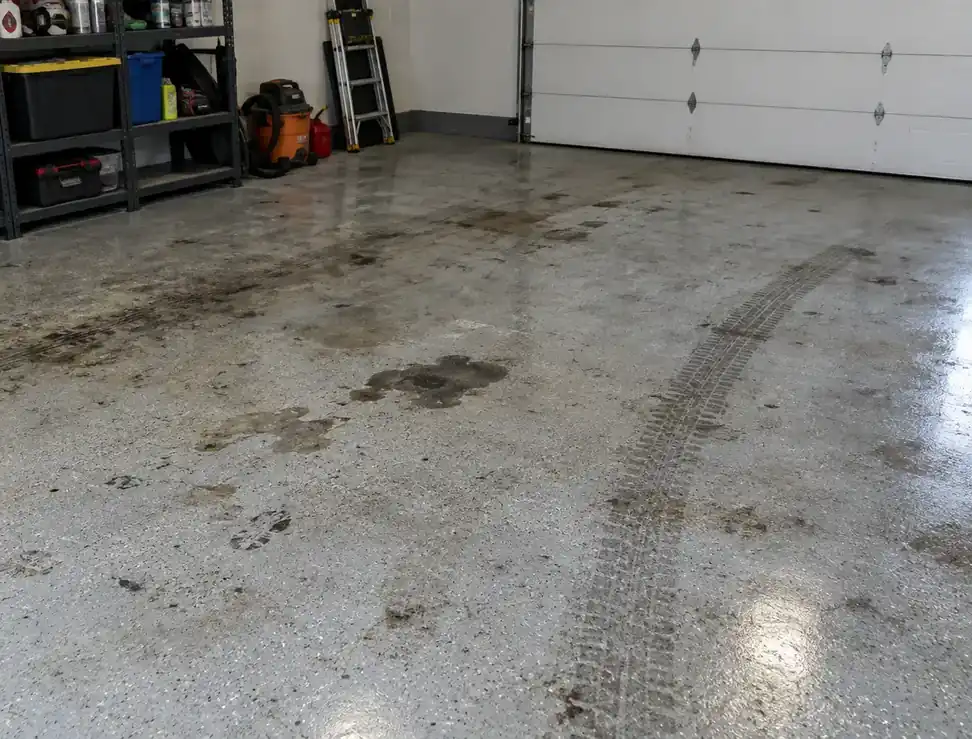
Every few months marks the right interval for a thorough deep clean of a polyaspartic garage floor, beyond the quick daily sweeping routine. Skipping this step lets ground-in grit and road film build a dull haze that regular dust-mopping won’t touch. A seasonal deep clean restores the floor’s original shine and keeps the surface performing the way it did on installation day.
We built our coatings to handle this kind of attention without flinching. With abrasion resistance rated up to 5X stronger than standard epoxy, polyaspartic coatings withstand heavy traffic and impact without showing wear, so a thorough scrub with a soft brush or non-abrasive pad won’t dull the finish or wear through the topcoat. That resilience means deep cleaning becomes routine maintenance, not a risk to the coating’s lifespan.
Does Cold Weather Affect Cleaning Schedules in Fort Wayne?
No. We formulate our polyaspartic coatings for a far wider application temperature range than epoxy’s 50°F minimum. That range means Northeast Indiana homeowners can tackle deep cleaning, touch-ups, or minor repairs in any season without worrying about weather compatibility.
What If the Deep Clean Reveals a Spot That Needs Repair?
Address it right away. Polyaspartic cures fast enough to allow foot traffic within hours and vehicle traffic the same day in most cases, compared with epoxy’s 24 to 72 hours for foot traffic and up to a week before cars return. That quick turnaround keeps downtime minimal.
A practical deep-clean schedule looks like this:
- Perform light sweeping and spot-wiping weekly.
- Run a full scrub-and-rinse deep clean every three to four months.
- Treat visible stains immediately, regardless of the regular schedule.
- Inspect for chips or wear during each deep clean and schedule repairs promptly.
How Do You Remove Oil and Stains?
Oil, grease, and road salt sit on top of a Duralast polyaspartic floor instead of soaking in. Bare concrete behaves like a sponge, pulling stains deep into the slab where they become permanent. A sealed polyaspartic surface acts more like a shield, holding contaminants on top where we can wipe them away. That difference is why ease of cleaning ranks among the top reasons Fort Wayne homeowners choose a coated floor over untreated concrete in the first place.
Removing a fresh oil spot takes only a few steps.
- Blot excess oil immediately with a paper towel or clean rag.
- Apply a mild degreaser or dish soap diluted in warm water.
- Scrub the spot with a soft-bristle brush or non-abrasive pad.
- Rinse thoroughly with clean water and dry with a towel or squeegee.
What If the Stain Has Already Dried or Set In?
Dried stains need a bit more muscle, and that’s where Duralast earns its reputation. The coating resists abrasion five times better than standard epoxy. We can scrub harder on stubborn spots without scuffing or dulling the finish. A nylon brush with a stronger degreaser concentration usually lifts set-in oil without any specialty chemicals.
Will Stains Damage the Coating Permanently?
No, as long as spills get addressed within a reasonable timeframe. The non-porous surface simply doesn’t bond with oil, antifreeze, or salt residue the way raw concrete does. Routine attention keeps stains from becoming a long-term problem and preserves the floor’s appearance for years.
What Cleaning Mistakes Should You Avoid?
Three errors account for most of the complaints we hear from Fort Wayne homeowners: overcomplicating the routine, rushing the cure window, and blaming the sun for discoloration. Each mistake is avoidable once the basics of cleaning a polyaspartic garage floor are understood.
Scrubbing a sealed floor like bare concrete wastes effort. Keeping the surface clean stays genuinely simple. The coating seals the slab and keeps dirt, oil, and salt from soaking in. Reaching for harsh degreasers or heavy equipment solves a problem that does not exist on a properly cured polyaspartic surface.
How Soon Can We Drive on a Floor After Cleaning or a Touch-Up?
Patience matters more than most homeowners expect. Our polyaspartic floors reach foot-traffic readiness in four to six hours and handle vehicle traffic within 24 hours after any coating touch-up. Parking a car before that window closes risks tire marks and disrupts the chemical bond before it fully sets.
Does Sunlight Turn a Polyaspartic Floor Yellow?
Sun exposure is rarely the real culprit. Polyaspartic chemistry holds its clarity and color under UV light, unlike epoxy, which yellows and degrades over time. When a floor looks discolored, we check for a leftover cleaning product residue first.
Common mistakes to avoid:
- Using heavy-duty scrubbing tools on a sealed surface
- Driving on the coating before the stated cure window ends
- Assuming sun exposure caused yellowing instead of checking cleaning chemicals
Homeowners across Fort Wayne with lingering cleaning or maintenance questions can reach Duration Concrete Coatings directly for guidance specific to their installation.
TL;DR — Cleaning a Polyaspartic Garage Floor at a Glance
- You only need a soft broom or dust mop, a microfiber mop, warm water, and a pH-neutral cleaner.
- Sweep grit regularly and wipe up oil, salt, and spills right away.
- Deep clean with a scrub and rinse every three to four months.
- Blot oil, then use mild soap or a mild degreaser with a soft brush and rinse.
- Avoid harsh chemicals, abrasive tools, and driving on the floor before a touch-up has cured.
- Next step: Contact Duration Concrete Coatings with questions or for a free estimate.
Related Resources
- Garage Floor Coating
- Huntertown, IN Concrete Coatings
- Polyaspartic Floor Coating Pros and Cons
- What Is Polyaspartic Floor Coating?
- Is Polyaspartic Coating Worth It?
- Road Salt Damage on Concrete Garage Floors
Get a Free Garage Floor Coating Estimate
In closing, maintaining a polyaspartic garage floor requires only straightforward cleaning practices and routine care to preserve its durability and appearance for years to come. Regular sweeping, prompt spill cleanup, and periodic washing with mild detergent protect the coating’s integrity while keeping your floor attractive and functional. By following these maintenance guidelines, you ensure your investment in a high-performance floor system continues to deliver the protection and aesthetic appeal your garage demands.
Contact Duration Concrete Coatings today for a free, no-obligation estimate on polyaspartic garage floor coating in Fort Wayne.
About Duration Concrete Coatings: Duration Concrete Coatings by Duralast® is a Fort Wayne, IN concrete coating company serving Allen County and Northeast Indiana. The team installs Duralast® polyaspartic floor systems with professional diamond-grinding prep for garages, basements, and commercial spaces. Contact Duration Concrete Coatings for a free estimate.