Blog
Quick Answer: How long does garage floor coating last? It depends on the system. A professionally installed epoxy floor typically lasts 3 to 5 years before peeling, fading, or staining appear, and big-box DIY kits can fail in 1 to 2 years. A polyaspartic coating lasts 20 to 25 years with proper care because it resists UV yellowing, abrasion, and freeze-thaw damage far better. Surface prep and professional application matter as much as the coating itself, which is why Duration Concrete Coatings pairs diamond grinding with its Duralast® polyaspartic system in Fort Wayne garages.
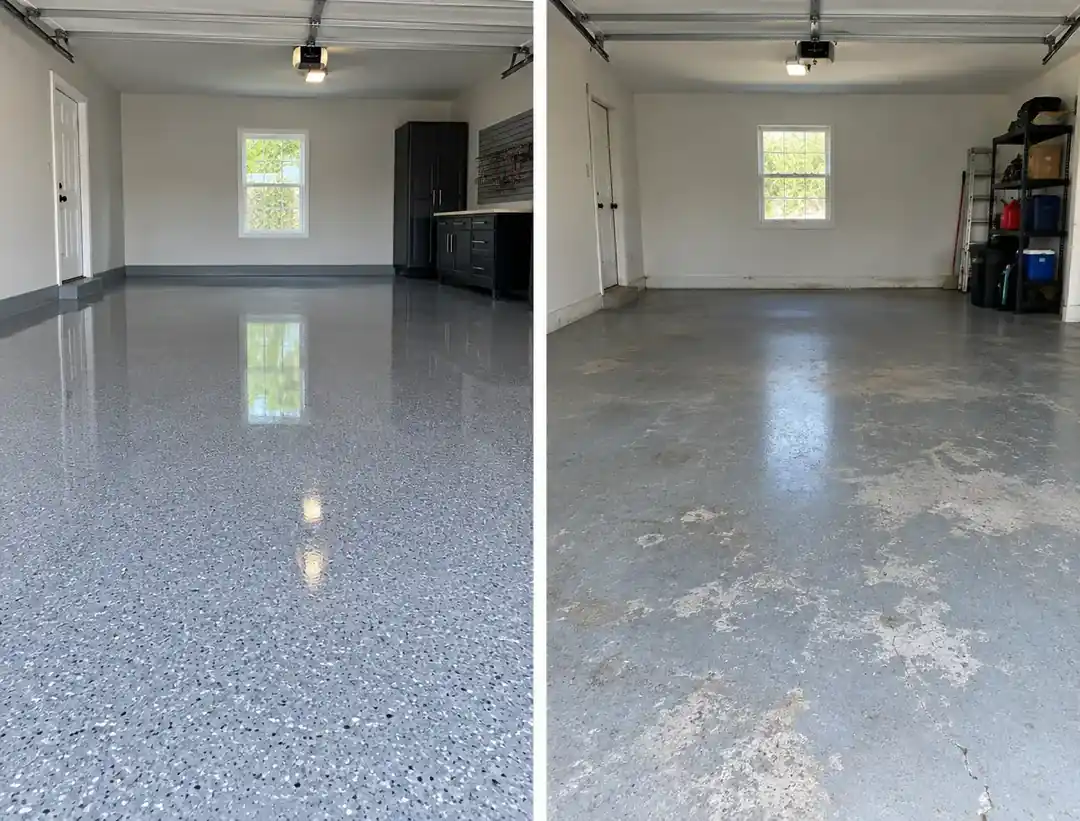
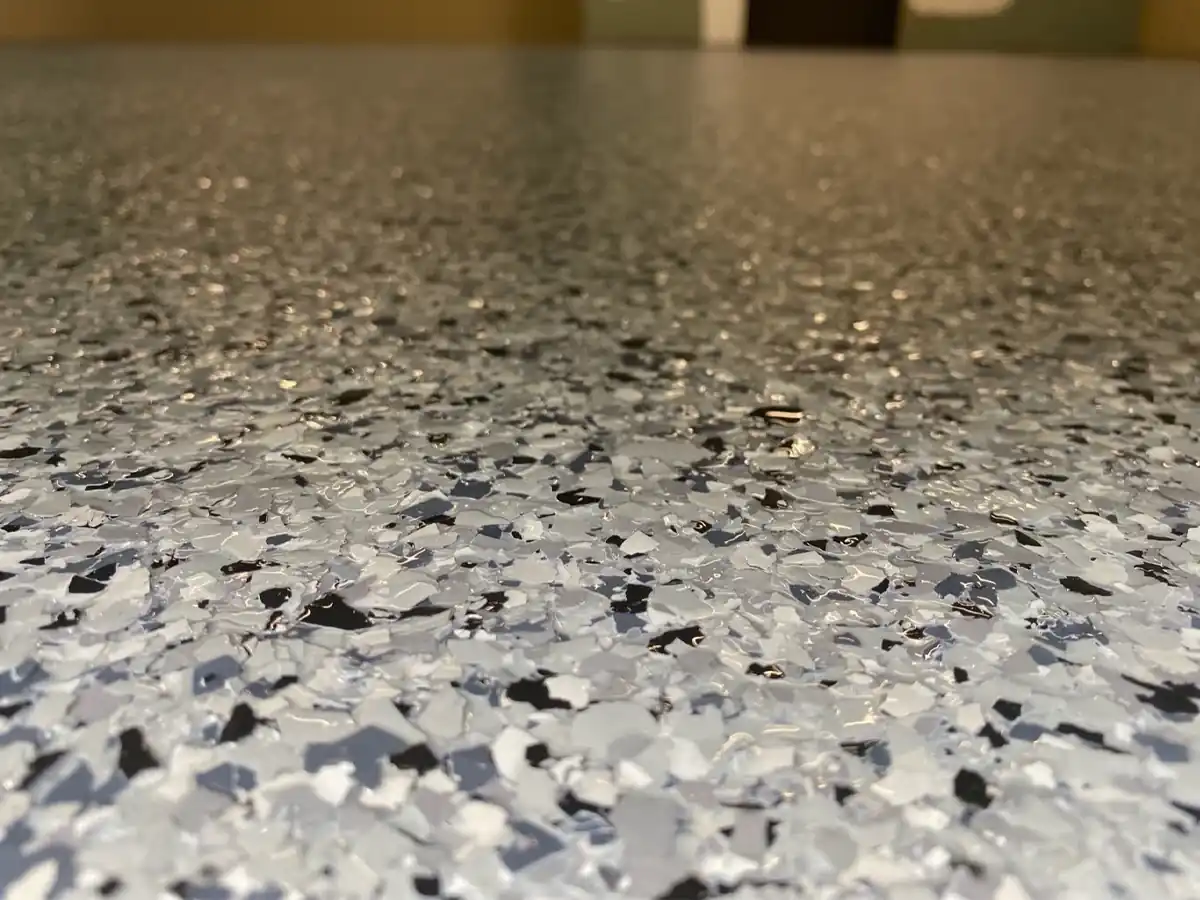
Polyaspartic garage floor coatings offer long-lasting durability; contact Duration Concrete Coatings for specific lifespan details. Epoxy garage floor coatings generally have a shorter lifespan; contact Duration Concrete Coatings for specific details. We install Duralast® polyaspartic systems exclusively for Fort Wayne garages because polyaspartic resists yellowing, cracking, and Indiana’s freeze-thaw cycles far better than standard epoxy.
What Are the Key Takeaways on Garage Floor Coating Lifespan?
- Polyaspartic coatings offer long-lasting durability with proper maintenance and care in Fort Wayne garages; contact us for specific lifespan details.
- Polyaspartic resists yellowing, cracking, and chemical damage better than epoxy floor coatings.
- Epoxy fails more frequently than polyaspartic, making polyaspartic the superior long-term investment.
- UV-resistant polyaspartic coatings outperform alternatives in both strength and durability for garage floors.
How Long Does Garage Floor Coating Last?
Answers depend entirely on the coating system installed. Garage floor coating lifespan varies widely by product. The gap between options is larger than most Fort Wayne homeowners expect.
Epoxy sits at the shorter end. A professionally installed epoxy floor typically begins showing peeling, fading, or staining well before a polyaspartic system does. That timeline assumes correct installation by a trained crew, not a DIY kit.
Polyaspartic performs differently, offering long-lasting durability with proper care, outlasting epoxy significantly. We install our Duralast polyaspartic system for exactly this reason: for most homeowners and businesses, it becomes a one-time floor that lasts far longer than a coating they redo every few years.
| Coating Type | Typical Lifespan | Common Failure Signs |
|---|---|---|
| Epoxy | Shorter service life | Peeling, fading, staining |
| Duralast Polyaspartic | Longer service life | Rare when installed correctly |
Does the Slab Itself Affect How Long a Coating Lasts?
Yes, and often more than people assume. Slab condition, meaning moisture levels, cracking, and prior sealant use, moves the outcome more than square footage ever does. That’s why we start every project with a free on-site estimate rather than a phone quote.
Is Polyaspartic Worth the Higher Upfront Cost?
For most Fort Wayne garages, yes. Paying more upfront for a coating engineered for long-term durability can cost less over time than repeatedly replacing a shorter-lived epoxy system. Homeowners who skip proper surface prep risk cutting that lifespan short regardless of which coating they choose. Installation quality matters as much as material selection.
How Long Do Polyaspartic Floors Really Last?
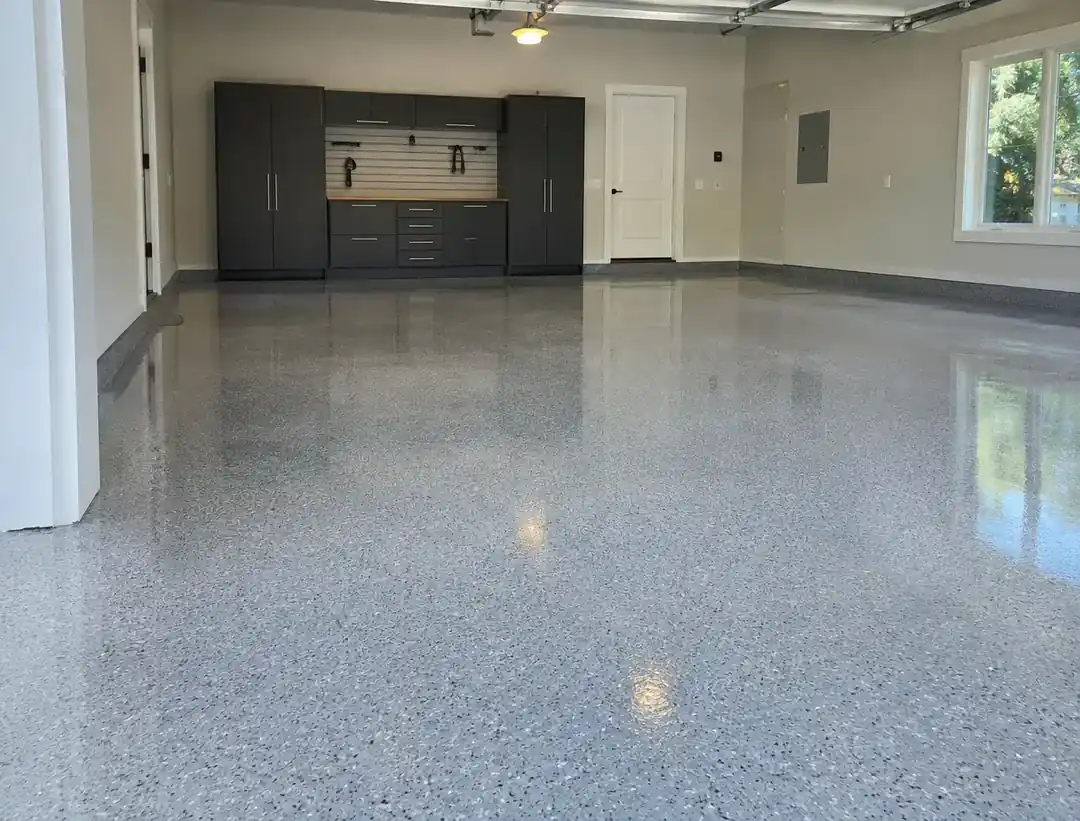
Polyaspartic garage floors deliver long-term protection when installed correctly, and cure speed sets the tone from day one. Foot traffic returns to the surface in 4 to 6 hours. Full vehicle traffic follows within 24 hours, a turnaround few coating systems can match.
That rapid cure isn’t just about convenience. Duration Concrete Coatings’ Duralast polyaspartic system lets vehicles return to the garage within 24 hours of installation, meaning a project can start on a Friday and the garage is back in service by Saturday. Homeowners rarely lose an entire weekend to the process.
Strength matters just as much as speed. Duralast polyaspartic exceeds the abrasion resistance of standard epoxy coatings, and we rate it for heavy residential and light commercial use. Tire traffic, dropped tools, and rolling toolboxes wear less on the surface over time compared to standard epoxy.
Does Garage Floor Coating Fade or Yellow Over Time?
Polyaspartic resists the sun damage that shortens epoxy’s life. Our coatings hold their clarity and color under UV exposure, while epoxy tends to yellow and degrade with sun exposure. That stability protects the finish year after year, even on garages with south-facing doors that see direct light daily.
What Determines How Long a Polyaspartic Garage Floor Lasts?
Longevity depends less on the product and more on the process. Reaching a polyaspartic floor’s full lifespan requires proper surface preparation and professional application. Skipping either step shortens the floor’s service life no matter how strong the coating itself is. Below is a quick view of what drives performance:
| Factor | Why It Matters |
|---|---|
| Surface prep | Poor grinding weakens adhesion |
| Application method | Uneven coats crack sooner |
| Traffic load | Heavy use tests abrasion resistance |
| UV exposure | Determines color and clarity retention |
Bond strength is measurable, too: the industry’s ASTM D7234 pull-off adhesion test for coatings on concrete shows how well a coating grips the slab, and it’s where poor prep shows up first. Application skill also covers safety, since polyaspartic hardeners contain isocyanates, a chemical family that OSHA identifies as a respiratory and skin hazard requiring proper handling.
📞 Want a Coating That Outlasts Epoxy? Duration Concrete Coatings installs Duralast® polyaspartic floors across Fort Wayne and Northeast Indiana, with diamond-grinding prep and a one-day turnaround. Schedule your free on-site estimate and get a lifespan recommendation for your specific slab.
Why Does Epoxy Fail so Much Sooner?
Chemistry sets the ceiling on epoxy’s lifespan. The resin cures slower than polyaspartic and stays vulnerable to sunlight long after installation, which is why so many garage floors start peeling or fading well before a comparable polyaspartic system would.
Cure time tells much of the story. Epoxy needs 24 to 72 hours before we allow foot traffic on it. Homeowners often wait up to a week before parking a vehicle again. That downtime, 3 to 7 days for a standard epoxy installation, creates a longer window for dust, moisture, and foot traffic to compromise an uncured surface before it ever reaches full strength.
Does DIY Epoxy Last as Long as Professional Installation?
No. Big-box DIY kits fail far faster than professionally applied systems, sometimes in as little as 1 to 2 years. Thin mil thickness, rushed surface prep, and inconsistent mixing all shorten the coating’s working life. We see this pattern often in Fort Wayne garages where a weekend kit gets replaced within a couple of seasons.
Why Does Epoxy Turn Yellow?
Sunlight breaks down epoxy’s chemical structure over time. UV stability separates coatings more than most homeowners realize: epoxy tends to yellow and degrade with sun exposure. Better-performing systems hold their color and clarity for years. A garage with a window or a sun-facing bay door accelerates that discoloration.
The pattern is consistent across every failure mode:
- Slow cure: extends vulnerability window during installation
- Extended downtime: 3 to 7 days before full garage use resumes
- DIY shortcuts: 1 to 2 year lifespan for store-bought kits
- UV exposure: yellowing and surface degradation over time
What Makes Polyaspartic Outperform Epoxy Overall?
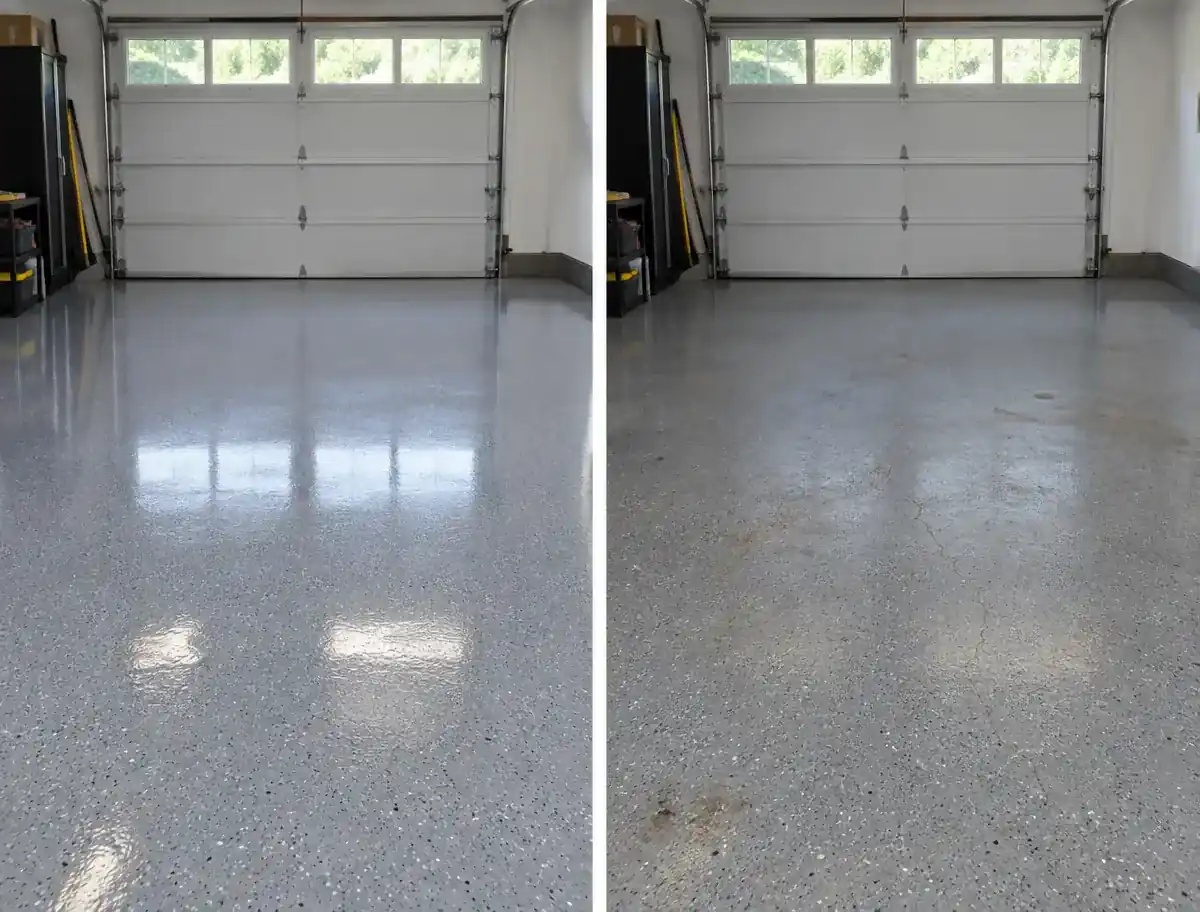
Chemistry separates the two coatings more than marketing ever will. Polyaspartic resins cure through a different reaction than epoxy. That reaction produces a harder, more stable surface from the first application onward. For homeowners asking how long does garage floor coating last, the answer traces directly back to which resin system went down on the slab.
Abrasion resistance tells much of the story. Our polyaspartic system withstands roughly three times the wear that standard epoxy tolerates, as our Duralast strength testing results detail. Wear like this is typically measured with the ASTM D4060 Taber abrasion test for organic coatings. Tire traffic, dropped tools, and dragged equipment leave far less visible damage over the years. Epoxy floors often show dulling and scuffing in high-traffic zones well before a decade passes; polyaspartic resists that pattern.
Temperature flexibility matters just as much in our region. We apply polyaspartic coatings across a wider temperature range than epoxy requires. Epoxy typically demands temperatures above 50°F to cure properly. That wider window lets us control application conditions instead of scrambling around seasonal limits, which protects the bond quality that determines long-term performance.
Does Polyaspartic Really Handle Fort Wayne Winters Better?
Yes. We pair diamond-grinding surface preparation with our Duralast® system specifically because Northeast Indiana winters punish concrete. Freeze-thaw cycling and road salt exposure break down ordinary coatings, but this combination resists both.
Will the Floor Yellow Over Time?
No, not under normal use. The Duralast clear topcoat is engineered against UV-related yellowing and degradation, even with sunlight streaming through garage windows daily, a common failure point for standard epoxy.
Given these freeze-thaw and salt conditions, polyaspartic stands as the only coating system we recommend for Fort Wayne garages.
Which Coating Delivers Better Long-Term ROI?
Polyaspartic coatings are designed for long-term durability, potentially offering better value over the life of the floor. Epoxy wins on day-one price. How long garage floor coating lasts determines which system actually costs less across a decade or two of use, which is why a polyaspartic vs. epoxy cost comparison should always factor in recoating.
Epoxy’s main selling point is affordability. A lower installed price attracts budget-conscious homeowners, and that math holds up for the first few years. Once maintenance and recoating enter the picture, though, the advantage narrows fast. Polyaspartic’s longer service life and lighter maintenance load typically overtake epoxy’s cheaper start within a normal ownership timeline.
Here’s how the value comparison generally breaks down for a Fort Wayne garage:
| Coating | Upfront Cost | Long-Term Value |
|---|---|---|
| Epoxy | Lower initial investment | Higher long-term costs due to recoating and repairs |
| Duralast Polyaspartic | Higher initial investment | Lower long-term costs due to extended service life |
For Fort Wayne homeowners and business owners weighing upfront cost against long-term performance, Duration Concrete Coatings recommends scheduling a free on-site estimate to determine which coating system best fits your garage, budget, and timeline. Protective coating performance is also shaped by broader AMPP protective coatings standards, and our process is built around getting prep and application right the first time.
TL;DR — Garage Floor Coating Lifespan at a Glance
- Professionally installed epoxy typically lasts 3 to 5 years; DIY kits can fail in 1 to 2 years.
- Polyaspartic garage floor coatings last 20 to 25 years with proper maintenance and care.
- Epoxy yellows under UV and needs 3 to 7 days before full use; polyaspartic handles vehicles within 24 hours.
- Surface prep and professional application matter as much as the coating chemistry itself.
- Next step: Book a free on-site estimate with Duration Concrete Coatings to see how long a Duralast® floor will last on your slab.
Related Resources
- Garage Floor Coating Services
- Garage Floor Coating in Fort Wayne, IN
- Polyaspartic vs. Epoxy Durability Compared
- Polyaspartic vs. Epoxy Garage Floor Coating
- How Durable Is Epoxy Flooring?
- Is Polyaspartic Coating Worth It?
- Can Damaged Epoxy Flooring Be Repaired?
Get a Free Garage Floor Coating Quote
If your current epoxy floor is peeling, yellowing, or wearing thin, or you’re planning a first coating and want it to last, the right system and prep make the difference between a 3-year floor and a 20-year one. Our crew inspects your slab, explains which coating fits your garage, and installs Duralast® polyaspartic in as little as one day. Contact Duration Concrete Coatings today for a free, no-obligation quote.
About Duration Concrete Coatings: Duration Concrete Coatings by Duralast® is a Fort Wayne, Indiana concrete coating company serving homeowners and businesses across Northeast Indiana and Northwest Ohio. The team specializes in professional diamond-grinding surface preparation and its proprietary Duralast® polyaspartic system, a same-day, UV-stable coating built to resist peeling, yellowing, and freeze-thaw damage in garages, basements, and commercial floors.